Are Gifts and Inheritances Taxable in Canada? 2026 CRA Rules
Inheritances are NOT taxable in Canada.
If you receive cash, property, or investments from an estate, you do not report it as income on your tax return, and you do not pay tax on it. Whether your grandmother leaves you $500 or $5,000,000, every cent that hits your bank account is yours to keep tax-free.
However, while you (the beneficiary) pay nothing, the government still gets paid—they just get paid first.
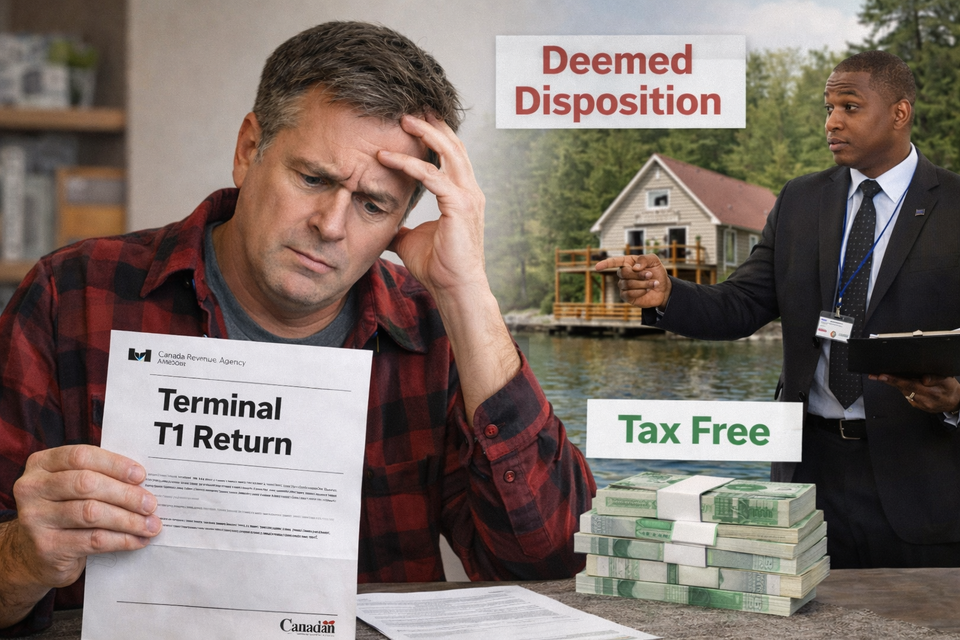
Before you see a dime, the estate must settle the "Final Tax Bill," and in 2026, that bill is driven by a brutal rule called Deemed Disposition. This rule often forces families to sell the family cottage or liquidate investments just to pay the CRA, leaving the beneficiaries with much less than expected.
This is the Official 2026 Guide to Inheritance and Gift Taxes. We explain why "Cash is King," why the family cottage is a tax bomb, and the "Inter Vivos" gifting strategies to strip the estate bare before the CRA can touch it.
1. The Golden Rule: Gifts are (Almost) Always Tax-Free
Can I give my daughter $50,000 for a down payment? Yes.
In Canada, unlike the US, there is no Gift Tax. You can give any amount of cash to an adult child, friend, or stranger, and neither of you pays a cent in tax.
The Exception: The "Attribution" Trap
While you can gift freely to adults, gifting to a minor (under 18) or a spouse triggers "Attribution Rules."
- The Scenario: You gift $50,000 to your wife to invest in stocks because she is in a lower tax bracket.
- The Trap: The CRA sees this as "Tax Evasion" (Income Splitting). Even though the account is in her name, the investment income (dividends/interest) will be attributed back to you and taxed at your high rate.
- The Fix: Wait until the child turns 18. Once they are an adult, attribution stops, and you can gift them cash to invest tax-free.
2. The "Deemed Disposition" Trap (The Real Death Tax)
If there is no inheritance tax, why does the estate lose so much money?
When a Canadian dies, the CRA treats it as if they sold everything they owned one second before death. This is called Deemed Disposition.
The Capital Gains Hit
If the deceased owned assets that increased in value (like a cottage, stocks, or a rental property), the estate must pay capital gains tax on that growth on their "Terminal Return."
- Example: Dad bought a cottage in 1990 for $100,000. He dies in 2026 when it is worth $1,000,000.
- The Gain: $900,000.
- The Tax: 50% of that gain ($450,000) is added to his final year's income.
- The Bill: At the top marginal rate (approx 53%), the estate owes the CRA roughly $240,000 in cash.
- The Crisis: If the estate doesn't have $240,000 in the bank, the kids are forced to sell the cottage just to pay the taxes.
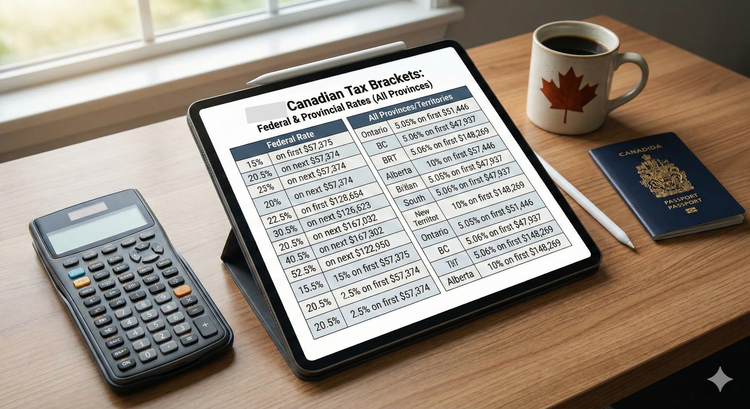
Note: The "Principal Residence" (the main home) is exempt from this tax. This only hits secondary properties and investments. To check the exact tax rates for 2026 that will apply to this gain, refer to our 2026 Canadian Tax Brackets guide.
3. The RRSP/RRIF Tax Bomb
The single biggest destroyer of inheritances in 2026.
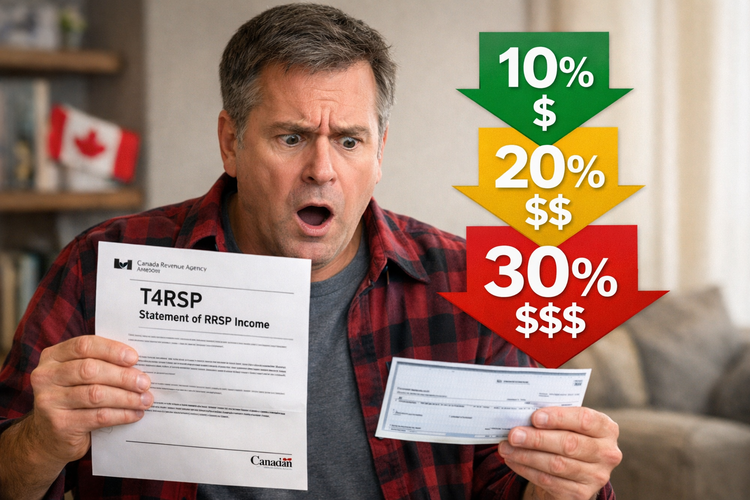
If you inherit an RRSP or RRIF from anyone other than a spouse, it is fully taxable immediately.
- The Rule: The entire balance of the RRSP is added to the deceased's income in the year of death.
- The Math: If Mom dies with $500,000 in her RRIF, the CRA treats her income for that year as $500,000 + her pension.
- The Result: The estate loses nearly 50% of that money to income tax. You, the beneficiary, only get what's left.
- The Spousal Rollover: If the beneficiary is a spouse (or a financially dependent disabled child), the RRSP can be transferred tax-free. If it goes to an adult child, the tax hits hard.
4. Probate Fees: The "Hidden" Estate Tax
After the CRA takes its cut, the Province steps in.
Probate (now called Estate Administration Tax in Ontario) is the fee the court charges to validate the Will.
2026 Probate Rates (Estimates)
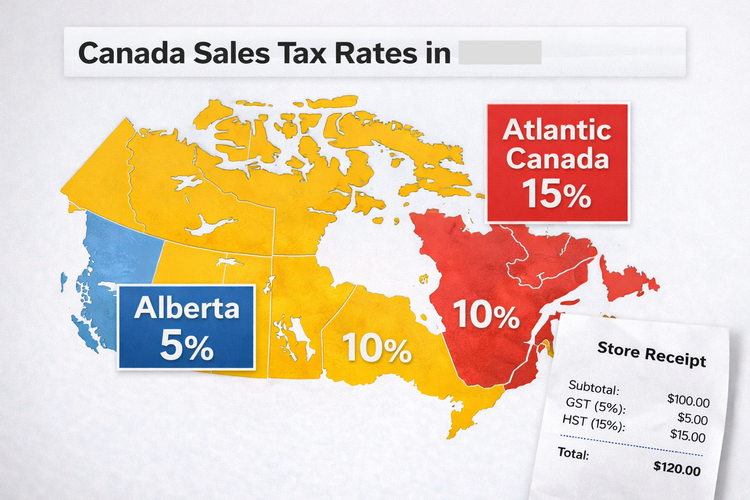
- Ontario: ~1.5% on assets over $50,000. (On a $1M home, that’s **$14,250**).
- BC: ~1.4% on assets over $50,000.
- Alberta: Capped at a flat fee (maximum $525). Alberta is the cheapest place to die in Canada.
- Quebec: Minimal flat fees (not based on value).
The "Cash Flow" Problem: Probate must be paid before the banks release the money. If the estate is "asset rich but cash poor," the Executor often has to pay this out of pocket and get reimbursed later. Executors should verify if they can access the CPP Death Benefit 2026 ($2,500) quickly to help cover these immediate filing fees.
5. Street Strategies: How to Bypass the CRA
The wealthy don't pay these taxes because they plan ahead. Here are the "Street Edge" moves to protect your legacy.
Strategy A: The "Inter Vivos" Gift (Give it Now)
Since there is no Gift Tax, the smartest move is often to give the money away before you die.
- The Move: If Dad has $100,000 sitting in a savings account, that money will be subject to Probate fees (1.5%) when he dies. If he gifts it to you today, the Probate fee is **$0**.
- The Risk: Once the money is gifted, it's gone. Dad can't ask for it back if he needs it for a nursing home.
Strategy B: The "Joint Account" Maneuver
- The Move: Add your adult child to your bank account as a "Joint Owner with Right of Survivorship."
- The Benefit: When you die, the money does not go to the estate. It automatically belongs to the surviving child. It bypasses Probate completely.
- The Warning: This is legally risky. If your child gets divorced or goes bankrupt, their creditors can seize your bank account because their name is on it. Before setting this up, ensure you are using one of the Best Bank Accounts for Seniors that allow for joint holders without extra fees.
Strategy C: The "Beneficiary Designation" Shield
Certain assets bypass the Will (and Probate) entirely if you name a specific beneficiary on the account.
- TFSA & RRSP: Always name a beneficiary directly on the bank contract. These assets flow directly to the person, skipping the 1.5% probate fee.
- Life Insurance: Insurance payouts are tax-free and bypass probate.
Frequently Asked Questions (FAQ)
Q: Does my inheritance affect my OAS or GIS?
A: No. An inheritance is not considered "Income" for the year you receive it. It will not trigger the OAS Clawback or reduce your GIS. However, any interest or growth that money earns after you invest it is taxable income.
Q: What if the estate has more debt than assets?
A: You cannot inherit debt in Canada. If your parent dies owing $50,000 on a credit card and has $0 in assets, the credit card company takes the loss. Do not let debt collectors bully you into paying. Check the Statute of Limitations on Debt in Canada to understand your rights—heirs are not liable for the deceased's unsecured debts.
Q: Do I pay tax on a life insurance payout?
A: No. Life insurance death benefits are 100% tax-free in Canada.
Q: What if I inherit a house with a mortgage?
A: You inherit the debt attached to the asset. If you want to keep the house, you must be able to qualify for the mortgage in your own name or pay it off. If you sell the house, the mortgage is paid from the proceeds, and you keep the rest.
About the Author
Jeff Calixte (MC Yow-Z) is a Canadian labour market researcher and digital entrepreneur specializing in government benefit data and cost-of-living support. As the founder of CanadaPaymentDates.ca and BetterPayJobs.ca, Jeff helps newcomers, students, and workers navigate the Canadian social safety net—from tracking CRA payment schedules to identifying entry-level employment opportunities.
Sources
- Canada Revenue Agency: Prepare tax returns for someone who died
- Ontario Ministry of Finance: Estate Administration Tax (Probate)
- CRA: Income Tax Folio S1-F5-C1, Related Persons and Dealing at Arm's Length
Note
Official 2026 tax brackets and withholding rates are determined by the Canada Revenue Agency (CRA) and provincial governments. While we strive to keep this information current, government policies are subject to change without notice. All data in this guide is verified against official CRA circulars at the time of publication. We recommend confirming the status of your personal file directly via CRA My Account or by calling the CRA benefit line at 1-800-387-1193.