How to Break a Lease in Canada Without Paying a Penalty (2026)
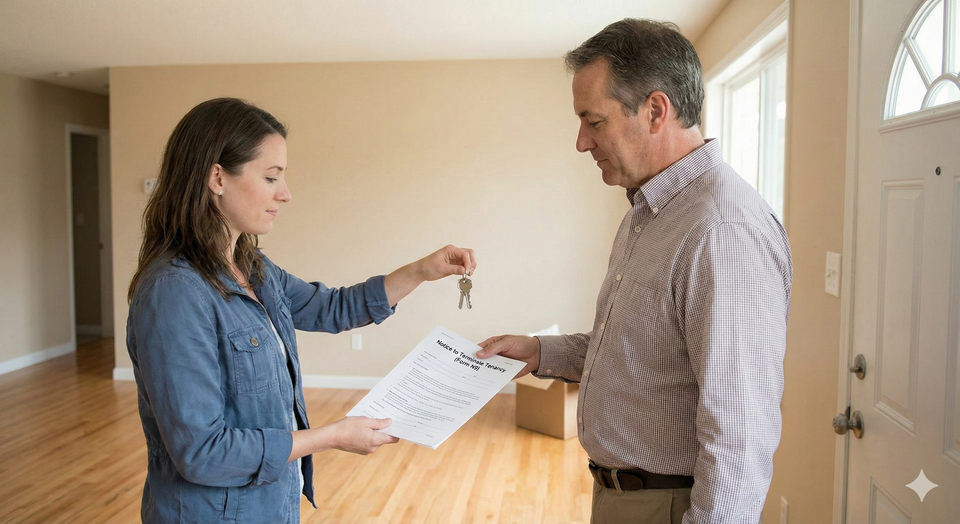
In the 2026 Canadian rental market, flexibility is a luxury many tenants feel they cannot afford. Whether you’ve found a better-paying role via BetterPayJobs.ca, need to move closer to family, or simply cannot keep up with the rising cost of living, breaking a fixed-term lease is a high-stress decision. The fear of being sued for "liquidated damages" or losing a month’s rent often keeps people trapped in units that no longer serve them.
However, the law across most Canadian provinces is not a prison. In 2026, there are specific legal "trapdoors" designed to let tenants exit their contracts early without paying a cent in penalties. From the highly effective "Lease Assignment" strategy to the expanded 28-day safety provisions, you have more power than you think.
This master guide provides a blueprint for breaking a lease in Canada legally. We will explore provincial differences, the exact forms you need, and how to protect your Tenant Credit Score while you move.
The 2026 "Lease Assignment" Loophole (The Golden Ticket)
If you are in a fixed-term lease in Ontario, BC, or Alberta, your most powerful tool is Assignment. This is not the same as subletting.
- Subletting: You move out for 3 months and plan to return. You are still legally responsible for the rent if the subtenant doesn't pay.
- Assignment: You find a new person to take over your lease permanently. Once they sign, your legal relationship with the landlord is terminated.
Why Landlords Hate It (And Why That Helps You)
In 2026, market rents are often higher than what you are currently paying. When you propose an assignment, you are offering the landlord a new tenant at your lower rent. Most landlords would rather refuse you and find their own tenant at a higher price.
The Strategy: 1. Ask for "General Consent" to assign your lease in writing.
2. If the landlord says "No" or doesn't respond within 7 days (in Ontario), you have the legal right to end your tenancy with just 30 days' notice via an N9 Form.
3. No penalty. No lost deposit. This is the #1 way to break a lease in 2026.
Breaking a Lease for Safety: The 2026 28-Day Rule
If you or a child living with you are experiencing domestic violence or sexual abuse, your safety is the priority of the law. In 2026, almost every province in Canada has implemented "Confidential Termination" rules.
- Ontario: Use Form N15. You can give just 28 days' notice to end your tenancy at any time, even in the middle of a lease.
- BC & Alberta: Similar "Safe Communities" provisions allow for a one-month notice period backed by a "Statement of Abuse" or a Peace Bond.
- Confidentiality: By law, the landlord cannot tell other tenants or your abuser that you have given this notice. This is a critical protection for those needing an immediate exit.
Provincial Breakdown: Rules for 2026
| Province | Notice Required (Fixed Term) | Penalty-Free Escape Route |
| Ontario | 60 Days (at end of term) | Lease Assignment Refusal (30 days) |
| BC | Mutual Agreement | "Material Term" Breach by Landlord |
| Alberta | No standard early exit | Duty to Mitigate (Landlord must re-rent) |
| Quebec | Lease Transfer (Assignment) | Moving to Senior Care or Low-Income Housing |
The Landlord's "Duty to Mitigate"
If you simply walk away from a lease in 2026, the landlord cannot just let the unit sit empty and bill you for the remaining 6 months. Across Canada, landlords have a Duty to Mitigate. This means they must try their hardest to re-rent the unit immediately. Once a new tenant moves in, your financial responsibility ends.
Part 1: Steps to Break Your Lease Legally
Step 1: Check for "Material Breach"
In 2026, if your landlord has failed to provide heat, ignored a major mold issue, or is constantly entering your unit without 24 hours' notice, they have breached the lease. In BC, this is called a "Material Term Breach." You can issue a "Notice to Correct," and if they don't fix it, you can leave without penalty.
Step 2: Request the Standard Lease (Ontario Only)
If your landlord did not use the Ontario Standard Lease form, you have a one-time "Get Out of Jail Free" card. You can demand the form, and if they don't provide it within 21 days, you can withhold one month's rent. If they still don't provide it, you can give 60 days' notice to leave—even if your lease was supposed to last another 10 months.
Step 3: Negotiate a "Mutual Agreement"
Sometimes, a landlord wants you to leave. If you are paying $1,500 and the unit could rent for $2,200, they might actually be happy to let you go. Use the N11 Form (Ontario) or a Mutual Agreement to End Tenancy (BC). This is often the precursor to a Cash for Keys negotiation.
Part 2: What Happens to Your Deposit?
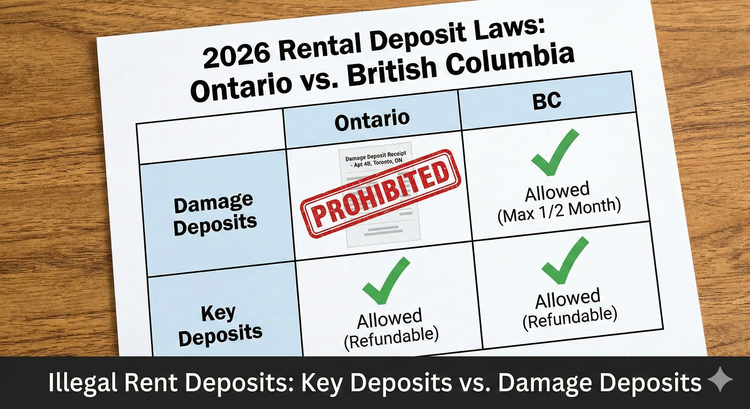
- Ontario: Since Damage Deposits are illegal, your Last Month's Rent (LMR) deposit must be applied to your final month. If you follow the legal assignment or N9 process, the landlord cannot keep this money.
- BC & Alberta: The landlord must return your security deposit within 15 days unless they have a court order or your written permission to keep it for damages or unpaid rent.
How to Break a Lease Canada
To break a lease in Canada without penalty in 2026: The most effective method is Lease Assignment. Ask your landlord for permission to assign your lease to a new tenant. If they refuse, you can legally end your tenancy with 30 days' notice (in Ontario) or apply for dispute resolution (in BC). Additionally, victims of domestic violence can exit any lease with 28 days' notice for safety reasons without financial penalty.
Master Strategy for Lease Exits (2026)
The 2026 rental market is so tight that "breaking a lease" is often a win-win for landlords, yet they will frequently try to intimidate tenants into paying a "cancellation fee." Understanding the Liquidated Damages clause is your first step in the deep dive.
1. The Myth of "Cancellation Fees"
Many 2026 leases contain a clause saying: "If the tenant breaks the lease, they must pay $2,000." * The Reality: In most provinces, these are considered "penalties" and are often unenforceable. A landlord can only charge you for actual costs incurred (advertising, credit checks for new tenants). If they find a new tenant in 2 days, they cannot charge you $2,000.
- The Strategy: If your landlord demands a fee, ask for an itemized invoice of their expenses. If they can't provide it, don't pay.
2. The "Harassment" Exit
In 2026, as landlords look for ways to increase rent, some turn to "Quiet Eviction"—making your life miserable so you leave.
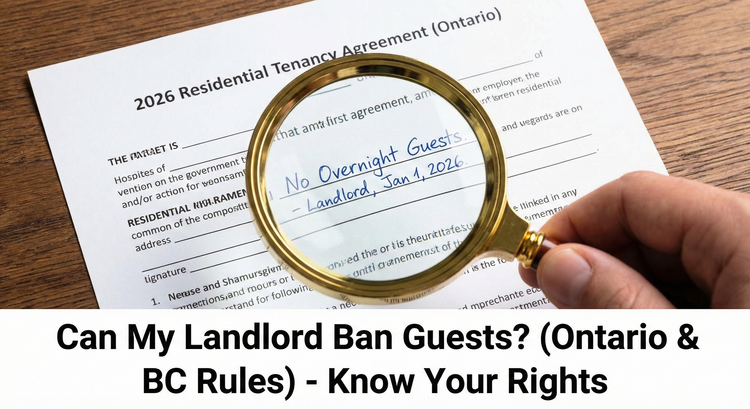
- The Defense: If your landlord is constantly texting you, showing up unannounced, or "inspecting" your unit every week, they are interfering with your Guest and Privacy Rights.
- The Move: File a T2 (Ontario) or RTB-1 (BC) for harassment. Often, the Tenancy Board will allow you to terminate the lease early as a remedy for the landlord's bad behavior.
3. Negotiating the "Clean Break"
If you have to move for a job relocation and don't want to deal with the 30-day assignment wait, use the Market Reality as leverage.
- The Script: "Market rent for this unit is now $500 higher than what I pay. If we sign an N11 today, you can have the keys by the 1st and relist at the 2026 market rate immediately. This saves you months of LTB delays." * The Payoff: Most landlords will agree to this "Clean Break" because it is a massive financial gain for them.
4. Protecting Your Credit and Benefits
If you leave a lease early and the landlord tries to "bill" you for the remaining months, it can damage your credit score under the 2026 Renters' Bill of Rights framework.
- The Protection: Ensure you have a signed N11 or Mutual Agreement before you hand over the keys. If you are on AISH or ODSP, a "debt to a landlord" can sometimes prevent you from getting a housing start-up grant for your next place. Always document that the lease ended "by mutual consent."
Frequently Asked Questions (FAQ)
Q: Can I break my lease because of a "Bad Neighbor"?
A: Generally, no. A landlord is responsible for "Quiet Enjoyment," but if they are taking steps to deal with the neighbor (like issuing warnings), you cannot break your lease. If the landlord ignores the problem, you may have a case at the Board.
Q: What if I bought a house?
A: Buying a house is not a legal reason to break a lease. You must use the Assignment or Mutual Agreement strategies.
Q: Does my Tenant Insurance cover lease-breaking costs?
A: No. Tenant insurance only covers your belongings and liability. It does not cover your rent obligations.
Q: I’m moving for a job. Is that a valid reason?
A: Not automatically. However, in 2026, many employers will cover your "Lease Break Fee" as part of a relocation package. Check with your HR department.
About the Author
Jeff Calixte (MC Yow-Z) is a Canadian labour market researcher and digital entrepreneur specializing in government benefit data and cost-of-living support. As the founder of CanadaPaymentDates.ca and BetterPayJobs.ca, Jeff helps newcomers, students, and workers navigate the Canadian social safety net—from tracking CRA payment schedules to finding entry-level work.
Sources
- Tribunals Ontario: Brochure: How a Tenant Can End Their Tenancy
- BC Residential Tenancy Branch: Ending a Tenancy - Official 2026 Guide
- Service Alberta: RTA Handbook: Termination of Tenancy
- Éducaloi: Tenants: Leaving Your Place Before the Lease Ends (Quebec)
Note
Rental laws and eviction guidelines are determined by provincial bodies (such as the LTB in Ontario or the RTB in BC) and are subject to legislative change. This guide provides a summary of current tenant rights for educational purposes and does not constitute legal advice. For specific disputes, we recommend contacting your provincial Legal Aid office or a licensed paralegal before signing any documents.