Canada Carbon Rebate 2026: Why the Payments Stopped (Final Retroactive Dates)
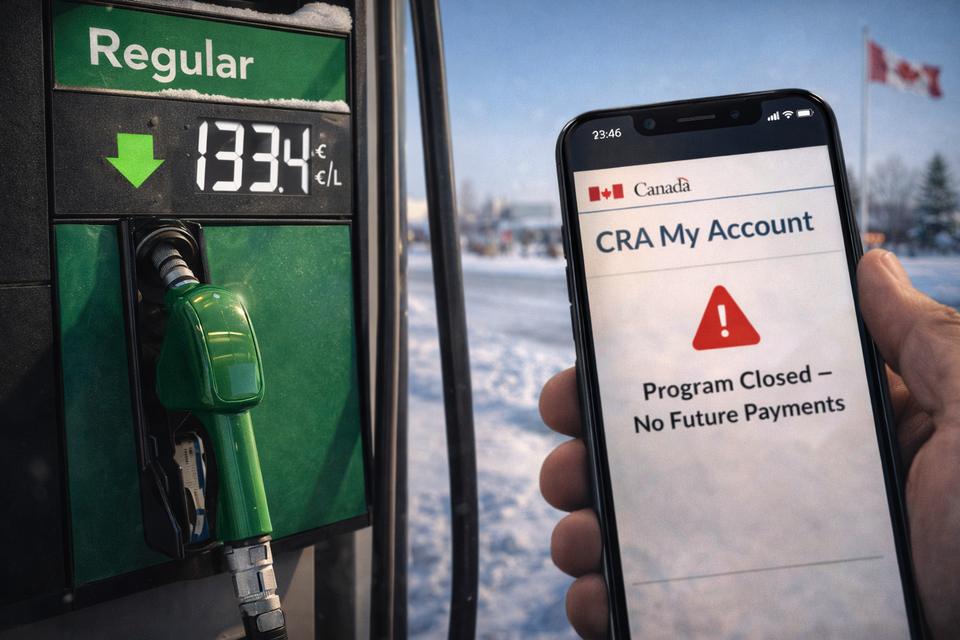
If you have been checking your bank account for a January 2026 Canada Carbon Rebate (CCR) deposit and found nothing, there is a very specific reason: The program has officially ended.
Following the federal budget changes in early 2025, the Government of Canada eliminated the consumer carbon tax (the federal fuel charge) effective April 1, 2025. Because the tax is no longer being collected at the pumps in provinces like Ontario, Alberta, and Saskatchewan, the government has stopped issuing the quarterly rebate cheques that used to offset those costs.
However, many Canadians are still seeing "Carbon Rebate" or "CAIP" mentions in their CRA portals. This is because retroactive payments are still being issued to those who were behind on their taxes.
This is the Official 2026 CCR Status Report. We explain why the regular schedule stopped, the provincial amounts for those still owed "back-pay," and how to verify if you have a final cheque waiting for you.
Looking for Active Benefits?
While the Carbon Rebate has ended, other quarterly credits are still active. Check the GST/HST Payment Schedule 2026 or our Master Payment Calendar 2026 to see what is still coming this year.
The 2026 Status: Is the Carbon Rebate Still Active?
No. The regular quarterly cycle of the Canada Carbon Rebate (formerly CAIP) concluded with the April 2025 payment.
In 2026, you will not receive automatic deposits in January, April, July, or October as you did in previous years. The federal "Backstop" pricing system was reduced to zero, meaning the revenue that funded these rebates is no longer being generated.
Exceptions: Who is getting paid in 2026?
The only people receiving CCR payments in 2026 are those who:
- Filed 2023 or 2024 taxes late: If you just recently filed your taxes for previous years, the CRA will issue your "missed" rebates as a lump sum.
- Successful Appeals: If you lived in a rural area and were wrongly denied the 20% supplement in 2024, your adjustment may arrive this year.
- Uncashed Cheques: If a 2024 cheque was mailed to an old address, you can still reclaim it. (See our guide on How to Find Uncashed CRA Cheques).
Quick Answers: The End of CCR
When is the next Canada Carbon Rebate in 2026?
There are no scheduled quarterly payments for the Canada Carbon Rebate in 2026. The program was terminated following the elimination of the federal consumer carbon tax on April 1, 2025.
Did the carbon tax rebate end in 2025?
Yes. The final regular quarterly payment for the Canada Carbon Rebate was issued on April 15, 2025. After that date, the federal fuel charge rates were reduced to zero, and the corresponding rebate program was wound down.
Can I still get the $1,120 Carbon Rebate?
The "up to $1,120" figure was the annual maximum for the 2024-2025 benefit year for a family of four in Alberta. You can only receive this amount in 2026 if you are claiming it retroactively for the period before the program ended.
The "Retroactive" Provincial Amounts
If you are filing back-taxes or resolving a dispute for the final 2024-2025 period, these are the last known quarterly rates the government was using. This is the money you are looking for if you are owed retroactive pay.
Quarterly Rates (Base Amount - 2024/25 Period)
| Province | Individual | Spouse/Partner | Per Child | Family of 4 |
| Alberta | $225.00 | $112.50 | $56.25 | **$450.00** |
| Saskatchewan | $188.00 | $94.00 | $47.00 | **$376.00** |
| Manitoba | $150.00 | $75.00 | $37.50 | **$300.00** |
| Ontario | $140.00 | $70.00 | $35.00 | **$280.00** |
| Newfoundland | $149.00 | $74.50 | $37.25 | **$298.00** |
| Nova Scotia | $103.00 | $51.50 | $25.75 | **$206.00** |
| New Brunswick | $95.00 | $47.50 | $23.75 | **$190.00** |
| PEI | $110.00 | $55.00 | $27.50 | **$220.00** |
The 20% Rural Supplement:
If you lived outside a Census Metropolitan Area (CMA) during the 2024-2025 year, your retroactive payment should include an additional 20% top-up on the amounts above (except in PEI, where it was already included in the base).
Why Was the Program Cancelled?
The decision to eliminate the consumer carbon tax was driven by affordability concerns. By early 2025, the "cost-of-living crisis" became the primary political focus in Canada.
- Lower Prices at the Pump: By removing the tax, the government aimed to reduce gas prices by approximately 17 to 20 cents per litre (the amount the tax was scheduled to reach by 2026).
- Inflation Control: It was argued that lower fuel costs would reduce the price of transporting food and goods, helping to cool down overall inflation.
- End of the Rebate: Since the rebate was a "revenue-neutral" system (it only existed because the tax was being collected), once the tax was gone, the funding for the cheques also disappeared.
Beware of "2026 Relief Payment" Scams
Because many people are still searching for "January 2026 Carbon Rebate," scammers are taking advantage of the confusion.
Common Scams to Avoid:
- The "$2,000 Relief Deposit" Text: You may receive a text saying, "Government of Canada has issued a new $2,000 Carbon Relief payment. Click here to verify your SIN." This is a scam.
- The "Carbon Rebate Application" Email: You do not need to "apply" for retroactive rebates. If you are owed money, the CRA will calculate it automatically when your taxes are assessed.
- Phone Calls Asking for Bank Info: The CRA will never call you and ask for your banking information to send you a "missed" carbon rebate.
How to Check If You Are Owed Back-Pay
If you suspect you missed a payment from late 2024 or early 2025, do not call the CRA immediately. Instead, use these digital tools:
- CRA My Account: Log in and click on the "Benefits and credits" tab.
- View "Canada Carbon Rebate" Status: It will show you a history of every payment sent. If a payment says "Issued" but you don't recognize the deposit, check your bank statements from that month.
- Check for "Uncashed Cheques": As mentioned earlier, this is the most common reason for "missing" money. Many seniors and students find $200-$400 waiting in this section.
The "Hidden" Rural Supplement: Why You Might Be Owed an Extra 20%
Many Canadians who lived in smaller communities during the 2024-2025 tax year are just now discovering they were eligible for an extra 20% top-up on every single one of their previous rebate cheques. If you lived in an eligible rural area but didn't "tick the box" on your tax return, you are currently leaving hundreds of dollars on the table.
The "CMA" Definition Hack:
Eligibility for the rural supplement is based on whether you live inside or outside a Census Metropolitan Area (CMA). However, CMAs are often much smaller than people realize.
- The Rule: If you live even one kilometre outside the official boundary of a major city like London, Windsor, or Winnipeg, you qualify.
- The Retroactive Fix: You can still claim this for past years by filing Form T1-ADJ (T1 Adjustment Request) or using the "Change my Return" feature in CRA My Account. You simply need to go back to your 2023 or 2024 return and tick the rural supplement box.
Newcomers & International Students: Claiming the "First Landing" Rebate
If you arrived in Canada on a Work Permit or Study Permit between 2022 and early 2025, you are likely eligible for a retroactive lump-sum payment, even if you didn't have a job when you first landed.
The "Form RC151" Strategy:
Since newcomers haven't filed a previous year's tax return, the CRA's automated system doesn't "see" you. To get your retroactive carbon rebate, you must submit Form RC151 (GST/HST Credit and Canada Carbon Rebate Application for Individuals Who Become Residents of Canada).
- The Payout: If you landed in Ontario in October 2024, submitting this form now could trigger a retroactive payment covering the January and April 2025 quarters.
- Double Claiming: Ensure you also check your eligibility for the GST/HST Credit on the same form, as these are processed together.
Why Some Provinces Have "Ghost" Rebates
A common source of confusion in 2026 is why residents of BC and Quebec never received the federal "Canada Carbon Rebate" cheques.
- British Columbia: BC has its own provincial carbon tax. Instead of a separate CCR cheque, they receive the BC Climate Action Tax Credit, which is bundled with their GST/HST payments. If you moved from Ontario to BC in 2025, your federal CCR stopped, and you had to wait for the BC provincial system to kick in.
- Quebec: Quebec uses a "Cap and Trade" system. Residents there never received quarterly cheques; instead, the "rebate" is effectively baked into lower provincial tax rates or specific green grants.
If you moved between provinces during the final year of the program (2024-2025), you may have a "partial year" eligibility that requires a manual calculation by the CRA. Use the "Enquiries" line to ensure your final cheques were mailed to the correct provincial rate.
The "Marital Status" Conflict: Who Gets the Final Cheque?
The CCR was a "One per Household" benefit. If you and your partner separated in 2025, there is often a dispute over who is entitled to the final retroactive payments from the 2024 tax year.
- The Rule: The payment goes to the person whose tax return was assessed first.
- The Conflict: If you were the primary recipient but your ex-partner filed their taxes earlier this year, the CRA may have issued the final retroactive payment to them.
- The Solution: If you were the primary caregiver for children during that period, you can appeal this through the "RC66" Canada Child Benefits Application to ensure the child-related portions of the carbon rebate are sent to you instead.
The Impact of the "Zero-Rate" Fuel Charge on Your 2026 Taxes
Now that the federal fuel charge is set to zero, you will notice changes when you file your taxes in the spring of 2026.
- No More Rebate Estimates: Your 2025 tax assessment will no longer show an "Expected CCR Payment" for the upcoming year.
- Business Expenses: If you are a small business owner or self-employed, you will notice that your fuel receipts no longer carry the "Carbon Tax" line item. This simplifies your bookkeeping but also means you can no longer claim the "Carbon Tax Rebate for Small Businesses" that was available in previous years.
- The Master List: To see how this change impacts your total government support, compare your new 2026 income against our Master Payment Calendar to find other credits that might replace this lost revenue.
How to Spot a "Zombie" CCR Payment
Because the government rebranded the CAIP to CCR right before the program ended, many people are seeing "strange" deposits in their bank accounts that they don't recognize. These are often "Zombie" payments—delayed or retroactive cheques from 2024 that are finally clearing.
Look for these codes on your 2026 bank statement:
- EFT FPT: Federal-Provincial-Territorial payment.
- CANADA CCR: The official new name.
- CLIMATE ACT: The old name (some banks still haven't updated their code).
- FED EFT: General federal transfer.
If you see one of these for an amount like $140 or $280, it is not a mistake—it is likely a retroactive payment triggered by a recent tax assessment or address update.
Would you like me to move on to Article #16: "The Ontario Trillium Benefit (OTB) 2026: Everything You Need to Know"?
Transitioning Your Budget in 2026
With the loss of the ~$1,000 annual carbon rebate (for a family of four), many households are feeling a "cash flow gap" in January and April. While gas is cheaper at the pump, that lump-sum deposit is no longer there to pay for larger bills.
If you are looking to replace that lost "rebate income" with a stable, part-time role:
👉 Find Daily Pay Jobs at BetterPayJobs.ca
About the Author
Jeff Calixte (MC Yow-Z) is a Canadian labour market researcher and digital entrepreneur specializing in government benefit data and cost-of-living support. As the founder of CanadaPaymentDates.ca and BetterPayJobs.ca, Jeff helps newcomers, students, and workers navigate the Canadian social safety net—from tracking CRA payment schedules to finding entry-level work.
Sources
- Department of Finance Canada: Eliminating the federal fuel charge 2025
- Canada Revenue Agency: Closed - Canada Carbon Rebate (CCR) for individuals
- Government of Canada: Budget 2025 Affordability Measures
Note Program Status: Discontinued. This benefit was eliminated or phased out as of April 2025. The information in this guide applies only to retroactive claims for previous tax years. Current 2026 payment schedules listed here refer to final close-out deposits only. We recommend logging into CRA My Account to check for any uncashed retroactive payments.