Cheap Movers in Toronto and Vancouver: How to Avoid the "Hostage" Scam
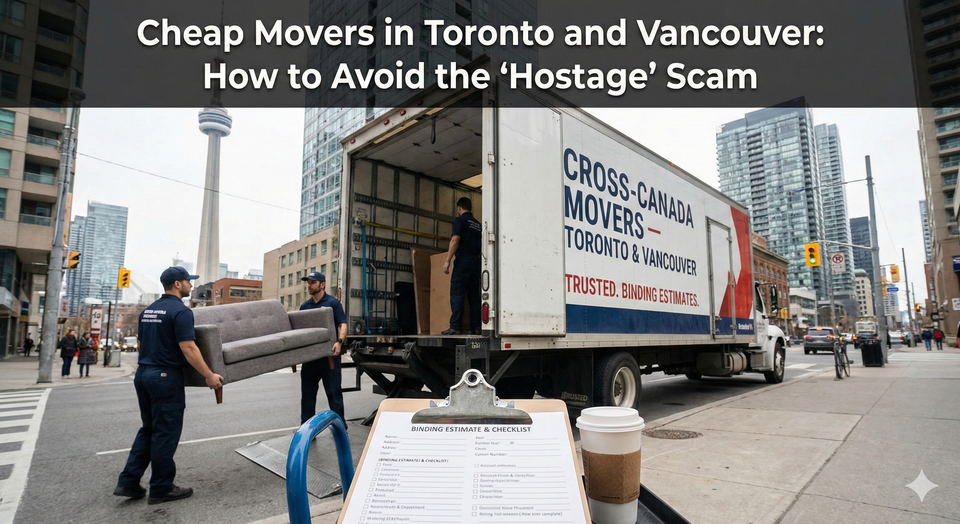
Moving is consistently ranked as one of the most stressful life events. In major Canadian hubs like Toronto and Vancouver, that stress is often amplified by a predatory segment of the moving industry. As housing costs rise, many people are forced to hunt for the absolute cheapest cities to live in Ontario or BC, making them vulnerable to "too good to be true" quotes from rogue moving companies.
The "Hostage Scam" is the most devastating fraud in the industry. It starts with a low-ball quote and ends with your entire life locked in a truck while a stranger demands thousands of dollars in cash to open the doors. In 2026, these scams have become more sophisticated, using AI-generated reviews and high-pressure digital marketing to appear legitimate.
This guide is a vital part of our Canada Housing Guide. We will reveal the legal protections available in Ontario and BC, identify reputable "budget" movers, and provide a master strategy to ensure your belongings arrive safely and at the price you were promised.
1. What is the "Hostage" Scam?
The scam follows a predictable, highly effective pattern designed to exploit the physical and emotional vulnerability of moving day.
- The Low-Ball Quote: You receive a quote that is 30% to 50% lower than the industry average. They often provide this estimate over the phone or email without seeing your home.
- The Loading: The movers arrive (often in an unmarked rental truck) and load all your belongings.
- The Ransom: Once the truck is full and the doors are locked, the lead mover presents a new contract. They claim your items were heavier than expected or that there are "emergency fuel surcharges." They demand an extra $1,000–$3,000, usually in cash or e-transfer only.
- The Stand-off: If you refuse to pay, they drive away with your furniture. They may hold your goods in an undisclosed warehouse for weeks, charging "storage fees" until you pay the full inflated amount.
2. Your Legal Rights: The 10% Rule
Many Canadians don't realize that provincial laws provide a specific "ceiling" for moving costs. Understanding these laws is your first line of defense.
Ontario: The Consumer Protection Act
In Ontario, if a mover provides you with a written estimate, the Ontario Consumer Protection Act (Section 10) states that they cannot charge you more than 10% above the estimated price.
- The Reality: If your estimate was $1,000, and the mover demands $2,000 at the door, they are breaking provincial law. You are legally entitled to receive your goods upon paying the original $1,000 plus 10% ($1,100).
British Columbia: Business Practices and Consumer Protection Act
BC recently strengthened its consumer laws via the Business Practices and Consumer Protection Amendment Act (2025). This legislation targets "unfair practices" and provides consumers with expanded rights to cancel contracts and seek damages through the Civil Resolution Tribunal (CRT).
The Federal "110% Rule"
For moves across provincial borders (e.g., Toronto to Vancouver), federal regulations overseen by the National Energy Board or Transport Canada generally follow the "110% Rule." A mover cannot demand more than 110% of the non-binding estimate at the time of delivery; any remaining balance must be billed at least 30 days later.
3. How to Spot Reputable "Cheap" Movers
You don't have to hire the most expensive company to be safe. Reputable budget movers exist—they just operate with transparency.
| Feature | Reputable Cheap Mover | Scam Mover |
| Estimate Type | Provides a "Binding" or "In-Person" quote. | Provides a "Rough Guess" via text or phone. |
| The Truck | Branded with company name and DOT/CVOR number. | Unmarked white rental truck (U-Haul/Discount). |
| Reviews | Balanced (4.2 - 4.7 stars) with specific details. | Perfect 5.0 stars or extremely generic praise. |
| Address | Has a physical warehouse you can visit. | Uses a P.O. Box or a residential home address. |
| Associations | Member of the Canadian Association of Movers (CAM). | Not listed or claims "Global" associations. |
Top Rated Budget Movers (2026)
- Toronto: El Cheapo Movers (highly rated for transparent hourly billing and student moves) and Cargo Cabbie (excellent for condo moves with high security).
- Vancouver: Small Moves Vancouver and Salmon's Transfer (known for long-standing reputations and fair local pricing).
4. Master Deep Dive: "Moving Protection"
Ontario Consumer Protection Act Moving Estimate 10% Rule
"Ontario Consumer Protection Act moving estimate 10% rule." * The Street Angle: Most movers will tell you the Act doesn't apply to "surprises" on moving day. This is false.
- The Hack: If you have a written estimate, the law is on your side.
- The Move: If a mover demands an extra $1,500, do not argue. Call the local police non-emergency line and the Ministry of Public and Business Service Delivery. Use the phrase: "I am a victim of an illegal hostage move in violation of Section 10 of the Consumer Protection Act." This specific language signals to the authorities that this is a criminal/regulatory matter, not just a "civil dispute."
Binding Not-to-Exceed Estimate Canada Explained
The "Binding Not-to-Exceed" estimate is the "Holy Grail" of moving contracts, yet few Canadians search for it by name.
- The Definition: This contract guarantees that you will never pay more than the quoted price, but if your items weigh less than expected, your price actually goes down.
- The Strategy: When calling movers, do not ask for a "quote." Ask: "Do you provide a Binding Not-to-Exceed estimate for local moves?" Scam movers will almost always say "No" or "We only do hourly." A reputable company will be willing to stand by their math after a virtual or in-person walk-through.
How to Report a Moving Company Scam Toronto
If you have already been scammed, the search for "how to report a moving company scam Toronto" is critical for recovery.
- Step 1: The Better Business Bureau (BBB) Scam Tracker. This alerts other consumers and creates a paper trail for the company’s business license review.
- Step 2: Consumer Protection Ontario. They can investigate the company and, in some cases, help facilitate the return of your goods.
- Step 3: Small Claims Court. If your goods are damaged or the overcharge was under $35,000, you can sue without a lawyer.
Vancouver Moving Company Hostage Scam Recovery
For those in BC, the "Vancouver moving company hostage scam recovery" process uses the Civil Resolution Tribunal (CRT).
- The Hack: The CRT is a 100% online tribunal that handles claims up to $5,000. It is much faster than traditional court.
- The Move: If a mover is holding your couch for a "storage fee" that wasn't in your contract, file a CRT claim immediately. The mere act of receiving a CRT notice often forces rogue movers to release the goods to avoid the legal scrutiny of a provincial adjudicator.
Spotting "Review Swapping" in Moving Companies
A rising trend in 2026 is "Review Swapping." Scam movers will buy an old, defunct business (like a closed bakery or flower shop) and change the name to a moving company. They "keep" the old 5-star reviews from the bakery to look legitimate.
- The Defense: Click on the "Older" reviews. If you see people praising the "best sourdough in the city" on a page now claiming to be a moving company, RUN. This is a 100% indicator of a fraud operation.
5. Moving Day "Street Checklist"
To ensure you are protected, never let a mover lift a single box until you have confirmed the following:
- Verify the Truck: Does the logo on the truck match the logo on your contract? If it's a "U-Haul" and the driver claims the company truck "broke down this morning," be extremely cautious. This is a classic bait-and-switch.
- Take "Before" Photos: Photograph the interior of the empty truck and the condition of your high-value items (TVs, mirrors, antiques).
- The Final Signature: Never sign a "Blank" or "Incomplete" Bill of Lading. Some movers will leave the "Total Cost" field empty, telling you they will "fill it in later" after they weigh the truck. This is how they legally trap you. Demand the total be written down before the truck leaves your driveway.
Moving Scams Canada
How do I avoid a moving scam in Canada? To avoid moving scams, always get a written, binding estimate and verify the company is a member of the Canadian Association of Movers (CAM). In Ontario, movers cannot legally charge more than 10% above their written estimate under the Consumer Protection Act. Avoid companies that give quotes over the phone without seeing your items, demand large cash deposits, or arrive in unmarked rental trucks. If your goods are held "hostage," contact the police and your provincial consumer protection agency immediately.
Frequently Asked Questions (FAQ)
Q: Can I refuse to pay if the price goes up?
A: You must pay the original estimated amount plus 10%. By law, the mover must then release your goods. Any further dispute about "extra weight" or "stairs" must be handled through the courts after your items are safe in your new home.
Q: Do movers have to be licensed in Canada?
A: Unlike the US, Canada does not have a federal "Mover's License." However, movers must have a valid business license in their city and a CVOR (Commercial Vehicle Operator's Registration) in Ontario or an NSC (National Safety Code) number in BC. Always ask for these numbers.
Q: Does my tenant insurance cover moving?
A: Most Tenant Insurance policies cover your belongings while in transit, but only for "named perils" like fire or theft of the entire truck. They usually do not cover damage caused by the movers dropping a box. You should buy "Full Value Protection" from the mover if you have expensive furniture.
About the Author
Jeff Calixte (MC Yow-Z) is a Canadian labour market researcher and digital entrepreneur specializing in government benefit data and cost-of-living support. As the founder of CanadaPaymentDates.ca and BetterPayJobs.ca, Jeff helps newcomers, students, and workers navigate the Canadian social safety net—from tracking CRA payment schedules to finding entry-level work.
Sources
- Canadian Association of Movers (CAM): Consumer Alerts and Certified Mover Directory
- Consumer Protection Ontario: Moving - Your Rights and the 10% Rule
- Better Business Bureau (BBB): Hostage Moves and Fraud Patterns 2026
- Civil Resolution Tribunal (BC): Small Claims and Moving Disputes
Note
Plans, prices, and interest rates are set by third-party providers and are subject to change without notice. While we strive to keep this data current, offers for internet, banking, and insurance vary by location and credit history. All "Zero-Cost" or "Low-Income" offers listed were verified at the time of publication. We recommend confirming final pricing directly with the service provider.