
How to Get a Canadian Credit Card with a Work Permit (The Fastest Way)
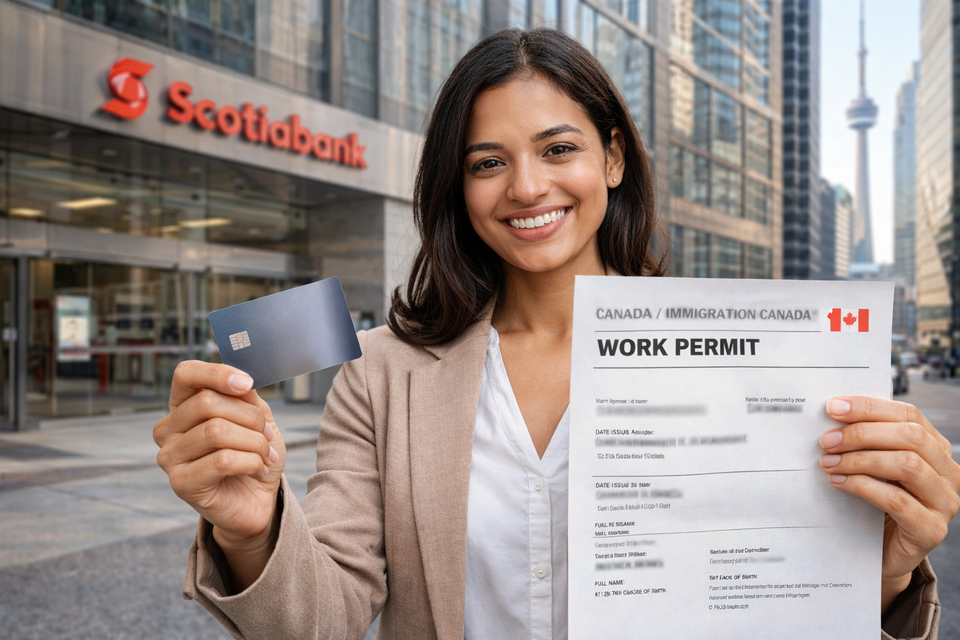
One of the first things you realize after landing in Canada on a work permit is that your financial life back home doesn't exist here. Whether you had a perfect credit score in London, Dubai, or Mumbai, the Canadian credit bureaus (Equifax and TransUnion) see you as a "blank slate."
This "zero credit" status can make it hard to do everything from renting an apartment to getting a phone plan. Many newcomers believe they have to start with a "Secured Credit Card"—where you give the bank $500 as a deposit—and wait a year to graduate to a real card.
That is the slow way.
In 2026, Canada’s major banks are aggressively competing for newcomers. If you have a valid work permit and a job offer, you can secure an unsecured credit card (no deposit required) with a limit of up to $5,000—and sometimes as high as $15,000—within your first week in the country.
This is your Fast-Track Guide to getting a Canadian credit card on a work permit. We’ll show you which banks to target, the exact documents to bring, and the "Nova Credit" hack that lets you "import" your score from your home country.
The "Big Five" Newcomer Programs (Comparison Table)
The fastest way to get a card is through a Newcomer Banking Package. These are specialized programs where the bank waives the requirement for a Canadian credit history.
| Bank | Program Name | Typical Newcomer Limit | Key Advantage |
| RBC | Newcomer Advantage | Up to $15,000 | Most aggressive limits for foreign workers. |
| Scotiabank | StartRight® | Up to $15,000 | Uses Nova Credit to check international scores. |
| CIBC | Smart for Newcomers | Up to $15,000 | Easy online application for foreign workers. |
| TD Bank | New to Canada | Up to $5,000 | Extensive branch network for in-person help. |
| BMO | NewStart® | Up to $5,000 | No annual fee options with high cash back. |
The Fastest Way: The "In-Branch" Strategy
While you can apply online for many things in 2026, applying for your first credit card in-person at a branch is significantly faster for work permit holders.
Why? An online system is a robot. If it doesn't see a Canadian SIN with a history, it might trigger a manual review that takes weeks. An in-branch "Newcomer Advisor" can verify your physical work permit and job offer on the spot, overriding the system's "zero credit" red flag.
The Required Document Checklist
Don't walk into the bank without these four items:
- Your Original Work Permit: Must be valid for at least 12 months (standard for most banks).
- Your Passport: Valid government-issued photo ID.
- A Social Insurance Number (SIN): Even though it's "optional" for credit, it speeds up the link to the credit bureaus.
- Employment Letter: This is the "secret sauce." If you can show a letter on Canadian company letterhead stating your salary and full-time status, the bank is much more likely to give you a $5,000+ limit instead of a $1,000 limit.
The "Nova Credit" Hack: Importing Your History
If you are from a country like India, the UK, Australia, Brazil, Mexico, or the Philippines, you should specifically look at Scotiabank or American Express.
In 2026, these institutions use a service called Nova Credit.
- How it works: You give them permission to pull your credit report from your home country.
- The Result: They "translate" that score into a Canadian equivalent. If you had a 750 score in India, Scotiabank will see you as a "low-risk" borrower immediately, rather than a "no-history" newcomer.
Fintech vs. Big Banks: The 2026 Digital-First Strategy
While the "Big Five" banks offer stability, many work permit holders in 2026 are turning to Canadian fintech companies for faster approvals and better rewards. If you are a digital-first user who doesn't want to wait for an in-branch appointment, companies like Neo Financial and KOHO offer unique pathways to credit.
The Neo Financial Advantage:
Neo has become a favorite for newcomers because of their Guaranteed Approval on secured options and high-speed approval on unsecured cards.
- Instant Virtual Card: Unlike traditional banks that make you wait 10 days for mail, Neo often gives you a virtual card in the app immediately after approval.
- The "Credit Builder" Bundle: You can start with a very low deposit (as low as $50) and see your score reported to both Equifax and TransUnion monthly.
The KOHO "Credit Building" Hack:
KOHO is technically a prepaid Mastercard, but they offer a specialized "Credit Building" tool for a small monthly fee ($5–$10).
- How it works: They open a line of credit in your name, you "repay" it automatically from your balance, and they report those "on-time payments" to the bureaus.
- Why it’s a 7-day win: It requires no hard credit check. If you have been rejected by a big bank, this is the safest way to start your history without another "hit" on your file.
The American Express "Global Transfer" Hack
If you currently hold an American Express card in your home country (India, UK, USA, Mexico, etc.), you can skip the newcomer line entirely. American Express has a Global Card Relationship program that is the single fastest way to get a premium card in Canada.
- The Strategy: You log into your foreign AMEX account and apply for a Canadian card using your existing account history.
- The Result: AMEX uses your internal history with them rather than your Canadian credit score. You can often get approved for high-tier cards like the AMEX Cobalt or Gold Card within minutes of landing.
- The Requirement: You must have held your foreign AMEX for at least 3 to 6 months and have a valid Canadian residential address.
Rent Reporting: Building Credit Without a Card
In 2026, your largest monthly expense can finally help you get a credit card. If you are renting an apartment on a Work Permit, you can use services like Borrowell Rent Advantage or Chexy to report your rent to Equifax.
Why this helps your application:
When you eventually walk into an RBC or TD branch, your credit file won't be "empty." It will show 3 or 4 months of on-time rent payments. This "thin file" is much easier for a bank to approve than a "blank file."
The "Two-Card" Strategy: Accelerating Your Score
To hit a 700+ score as fast as possible, you shouldn't stop at one card. Once you have been in Canada for 3 months and have your first card, you should apply for a second one from a different network.
- Card 1 (The Daily): A Visa or Mastercard from your primary bank (e.g., CIBC or RBC) with no annual fee.
- Card 2 (The Builder): A fintech card like Neo or a store-specific card like the PC Financial Mastercard (great for groceries).
The Logic: Having two "trade lines" reporting to the bureaus doubles the data points showing you are a responsible borrower. Just ensure you keep the utilization low on both.
Managing "Foreign Income" on Applications
When a Canadian credit card application asks for your "Annual Income," many newcomers make the mistake of only reporting what they earn in Canada.
- The Rule: If you still have rental income, dividends, or a remote job from your home country, you are often legally allowed to include that in your Total Gross Income.
- The Impact: A higher reported income leads to a higher credit limit. A higher limit means lower "utilization," which is the fastest way to boost your score.
The "Safety Net": Avoiding High-Interest Loans
In your first 6 months, you might face a cash flow gap. Avoid "Payday Loan" stores at all costs. These do not help your credit score and carry interest rates often exceeding 400%.
If you need a small "float" while waiting for your first paycheck:
- Bank Overdraft: Ask your newcomer advisor for a small ($500) overdraft on your chequing account.
- KOHO Cover: Small, interest-free advances to help with groceries.
- Government Benefits: Ensure you have filed for your GST/HST Credit and CCB as these tax-free payments provide a much safer "safety net" than high-interest debt.
Avoid the "Secured Card" Trap if Possible
Many tellers will try to sign you up for a Secured Credit Card (like the Home Trust Secured Visa) because it's easier for them to process.
The downside of secured cards:
- Your money is "trapped" as a deposit and earns $0 interest.
- The limits are often very low (e.g., $500).
- It takes longer to build a high-tier credit score.
The Strategy: Always ask for the Unsecured Newcomer Card first. Only accept a secured card if you have been in Canada for less than 3 years, have no job, and have already been rejected by two major banks.
3 Steps to Building a 700+ Score in 6 Months
Once you have the card, the "Fastest Way" to a high score involves three simple rules:
- The 30% Utilization Rule: If your limit is $5,000, never let your balance stay above $1,500. High utilization makes you look "desperate for credit" to the bureaus.
- The "Full Payment" Myth: You don't need to pay the whole balance every day. You just need to pay the Statement Balance in full by the due date. This proves you are a responsible borrower.
- Link Your Phone Bill: Once you have the card, use it to pay your Rogers, Bell, or Telus bill. Mobile providers report to credit bureaus, meaning you are building credit from two sources at once.
Frequently Asked Questions
How long does it take to get the physical card?
Once approved in the branch, your physical card will usually arrive in the mail within 5 to 10 business days. However, many banks can now give you a Digital Card inside their app immediately, which you can add to Apple Pay or Google Pay to start shopping that same day.
Can I get a credit card with a 6-month work permit?
It is much harder. Most Canadian banks require your work permit to be valid for at least 12 months from the date of application. If you have a short-term permit, you may be required to get a secured card until you can show proof of a permit extension.
Will applying for multiple cards hurt my score?
As a newcomer with zero score, a "Hard Inquiry" doesn't have much to drop. However, you should avoid "shotgunning" applications. Pick one bank from the Big Five and go in-branch. If they say no, wait 30 days before trying another.
Financial Benefits While You Wait
While you are building your credit to eventually buy a house or a car, don't forget that as a resident, you are also building up your government benefit entitlements. Even if you have zero credit, you can still receive thousands in tax-free money like the Canada Child Benefit or your first tax refund.
Need to Increase Your Income for a Higher Limit?
Canadian banks determine your credit limit based on your Gross Annual Income. If you are looking to boost your earnings to qualify for a "Premium" card with travel perks and lounge access:
👉 Find Daily Pay Jobs at BetterPayJobs.ca
About the Author
Jeff Calixte (MC Yow-Z) is a Canadian labour market researcher and digital entrepreneur specializing in government benefit data and cost-of-living support. As the founder of CanadaPaymentDates.ca and BetterPayJobs.ca, Jeff helps newcomers, students, and workers navigate the Canadian social safety net—from tracking CRA payment schedules to finding entry-level work.
Sources
- Scotiabank StartRight: Credit cards for foreign workers
- RBC: Newcomer Advantage banking and credit limits
- Nova Credit: How to use international credit in Canada
Note
Official 2026 payment dates and benefit amounts are determined by the Canada Revenue Agency (CRA) and provincial governments. While we strive to keep this information current, government policies and schedules are subject to change without notice. All data in this guide is verified against official CRA circulars at the time of publication and should be treated as an estimate. We recommend confirming the status of your personal file directly via CRA My Account or by calling the CRA benefit line at 1-800-387-1193.