Statute of Limitations on Debt in Canada: When Can They Stop Calling?
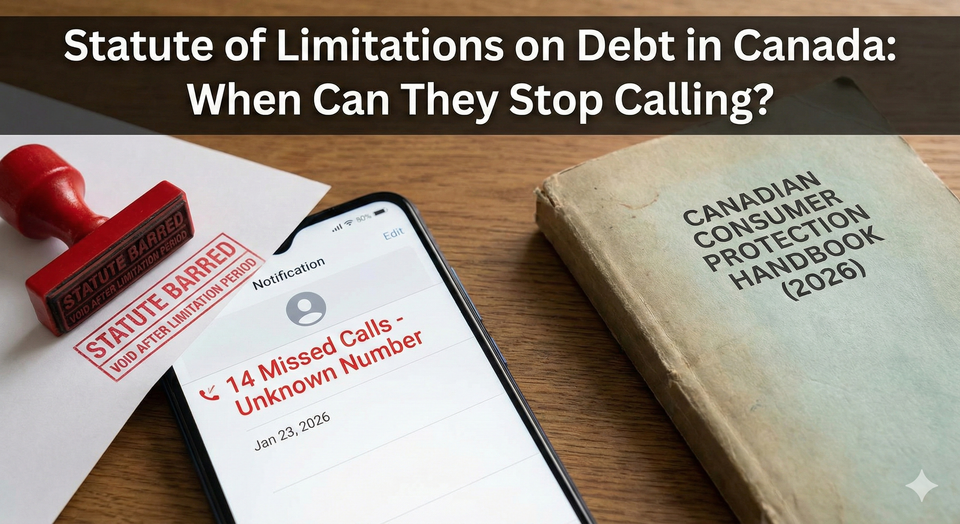
If you’ve ever been on the receiving end of a collection agency’s auto-dialer, you know the feeling: the phone rings at 7:01 AM, then at noon, then again at 8:59 PM. It feels like a lifetime sentence of harassment. But in 2026, Canadian law is clearer than ever: debt collectors do not have the right to chase you forever. There is a legal "shelf life" for debt, and once the clock runs out, their ability to harass you—and more importantly, to sue you—effectively vanishes.
The confusion for most Canadians lies in the difference between the Statute of Limitations (the legal right to sue) and Collection Agency Acts (the rules for phone calls). While the debt itself never truly "disappears" until it is paid, discharged, or settled, the legal teeth that make that debt scary have a strict expiration date. In most provinces, including Ontario, BC, and Alberta, that date is much sooner than you think.
As a core part of our Debt & Credit Series, this 2,000-word deep dive explains exactly when the phone has to stop ringing, how to calculate your "Clock," and the 0-competition strategies to silence "Zombie Debt" collectors once and for all.
1. When Do the Calls Stop?
When do debt collectors have to stop calling me in Canada? Legally, a debt collector can call you as long as the debt remains unpaid. However, their legal power to sue you or garnish your wages expires after the statute of limitations—which is only 2 years in Ontario, BC, Alberta, and most other provinces. To stop the calls before the debt is paid, you can send a "Cease and Desist" notice via registered mail, requiring them to communicate only in writing. If the debt is statute-barred (past the 2 or 6-year limit), you can inform the agency that you will not pay and that further calls constitute harassment under provincial consumer protection acts.
2. The Provincial Clock: 2026 Legal Limits
Every province has its own "Limitations Act." This is the window of time a creditor has to take you to court. If they miss this window, they can still call you, but they can no longer touch your paycheck or bank account.
| Province / Territory | Legal Limitation Window | The "Calling" Rule |
| Ontario | 2 Years | Can call, but no legal "teeth" after 2 yrs. |
| British Columbia | 2 Years | Strict 3-calls-per-week limit in 2026. |
| Alberta | 2 Years | Calls must stop if you dispute in writing. |
| Saskatchewan | 2 Years | Regulated by The Limitations Act. |
| Nova Scotia | 2 Years | Clock resets with any acknowledgment. |
| Quebec | 3 Years | Civil Code rules apply. |
| Manitoba / PEI | 6 Years | The longest windows in Canada. |
| New Brunswick / NL | 2 Years | Aligned with the "Short Clock" provinces. |
Clock Stopper Hacks
This deep dive reveals the technical "Street Hacks" used by credit lawyers and Licensed Insolvency Trustees to kill off old debt.
1. The Acknowledgment Trap (Texts and DMs)
Acknowledging a debt in writing text message."
- The Street Angle: Collectors are no longer just calling; they are texting, DMing on Facebook, and emailing.
- The Hack: In 2026, any electronic communication where you say "I'll try to pay" or "I know I owe this" counts as a written acknowledgment.
- The Strategy: This resets the 2-year clock to zero. If you were 23 months into your 2-year limit in BC, one text message gives the creditor another 24 months to sue you.
- The Move: If a debt is nearing the 2-year mark, do not respond to any electronic communication. Silence is your best legal defense.
2. The "Cease and Desist" Power Move
Can I make them stop calling without paying?
- The Hack: Yes. Under provincial Collection Agency Acts (like Ontario’s), you have the right to request that all communication be in writing only.
- The Strategy: Send a letter by Registered Mail (never email for this) stating: "I am requesting that you cease all telephone communication regarding account [Number] and only communicate with me in writing at the following address."
- The Payoff: Once they receive this, any further phone calls are a violation of provincial law. You can then file a complaint with your Provincial Consumer Protection office, which can result in the agency losing its license or being fined.
Zombie Debt and the Statute-Barred Defense
Can debt collectors sue after 2 years in Alberta.
- The Street Angle: "Zombie Debt" is debt that is 5, 10, or even 20 years old. Debt buyers purchase these files for pennies and try to "scare" you into a payment.
- The Reality: If they sue you for a 4-year-old debt in Ontario, you must still show up to court.
- The Hack: The statute of limitations is a defense, not an automatic shield. If you don't show up and plead that the debt is statute-barred, the judge will grant a "Default Judgment," and the debt becomes legally enforceable for another 10 years.
4. The CRA: The 10-Year "Super-Clock"
Following our CRA Master List, you must know that government debt is different.
- The Hack: The 2-year provincial rules do not apply to the Canada Revenue Agency.
- The Money: The CRA has 10 years to collect.
- The Strategy: While the phone calls for tax debt can be aggressive, the CRA rarely uses "private" collectors in the same way. If you are receiving tax calls, it is likely a scam or the CRA’s internal department. Unlike banks, the CRA can garnish your wages without a court order.
5. Credit Report vs. Legal Clock
If they can't sue me after 2 years, why is it still on my credit report?
- The Confusion: The "Legal Clock" (Statute of Limitations) is usually 2 years. The "Credit Clock" (Equifax/TransUnion) is 6 years.
- The Strategy: Even if you can't be sued, the debt will sit on your credit report as an R9 for 6 years from the date of last activity.
- The Move: To truly make the calls stop and fix your future, you may need a Consumer Proposal, which stops the calls and sets a 3-year "Purge" date for your credit report.
4. Summary Table: Calling vs. Suing Rights (2026)
| Feature | Within Statute (0–2 yrs) | Past Statute (2+ yrs) |
| Right to Call? | Yes (Regulated). | Yes (But limited). |
| Right to Sue? | Yes. | No (If you defend). |
| Garnish Wages? | Yes (With Judgment). | No. |
| Credit Impact? | High (R9). | Medium (Falls off at 6 yrs). |
| Cease & Desist? | Effective for calls. | Highly Effective. |
Statute of Limitations Debt Canada
When does the statute of limitations on debt expire in Canada? In most provinces (ON, BC, AB, SK, NB, NS), the statute of limitations for unsecured debt is 2 years from the date of last payment or written acknowledgment. After this 2-year window, a creditor loses the legal right to sue you or garnish your wages. While they can still technically call you to request payment, you can legally stop these calls by sending a written request (Cease and Desist) via registered mail, requiring them to communicate only in writing.
Frequently Asked Questions (FAQ)
Q: If I talk to a collector on the phone, does it reset the 2-year clock?
A: Generally, No. Verbal acknowledgment over the phone is hard for a collector to prove in court. However, any promise to pay or partial payment made after the call will definitely reset the clock.
Q: Can they call my boss or my family?
A: No. In 2026, a collector can only call your employer once to confirm your employment. They cannot discuss your debt with your boss, your parents, or your neighbors. Doing so is a major violation of the Collection and Debt Settlement Services Act.
Q: Does the "clock" stop if I leave Canada?
A: Yes. The limitation period is "tolled" (paused) if you are outside the province for an extended period. You cannot wait out the 2 years by moving to Europe and then coming back.
Q: What if the debt is for a car loan or mortgage?
A: Secured debt is different. The creditor can seize the asset (the car or the house) regardless of the statute of limitations on the "debt" itself. These rules primarily apply to unsecured debt like credit cards, lines of credit, and payday loans.
About the Author
Jeff Calixte (MC Yow-Z) is a Canadian labour market researcher and digital entrepreneur specializing in government benefit data and cost-of-living support. As the founder of CanadaPaymentDates.ca and BetterPayJobs.ca, Jeff helps newcomers, students, and workers navigate the Canadian social safety net—from tracking CRA payment schedules to finding entry-level work.
Sources
- Ontario.ca: Collection Agency Act - Prohibited Practices
- Credit Canada: How long can a collection agency pursue a debt in Canada?
- Financial Consumer Agency of Canada (FCAC): Dealing with a debt collector
Note Credit score algorithms (Equifax/TransUnion) and lending criteria are determined by private financial institutions and are subject to change without notice. This guide is for informational purposes only and does not constitute professional financial advice. If you are facing insolvency or legal action regarding debt, we recommend consulting with a Licensed Insolvency Trustee (LIT) or a non-profit credit counsellor.