How to Exchange Your Driver’s License in Ontario/BC 2026 (Step-by-Step)
Moving to a new province or a new country is a whirlwind of paperwork. Between tracking your Benefit Payment Dates and finding a place to live, your driver's license often falls to the bottom of the list.
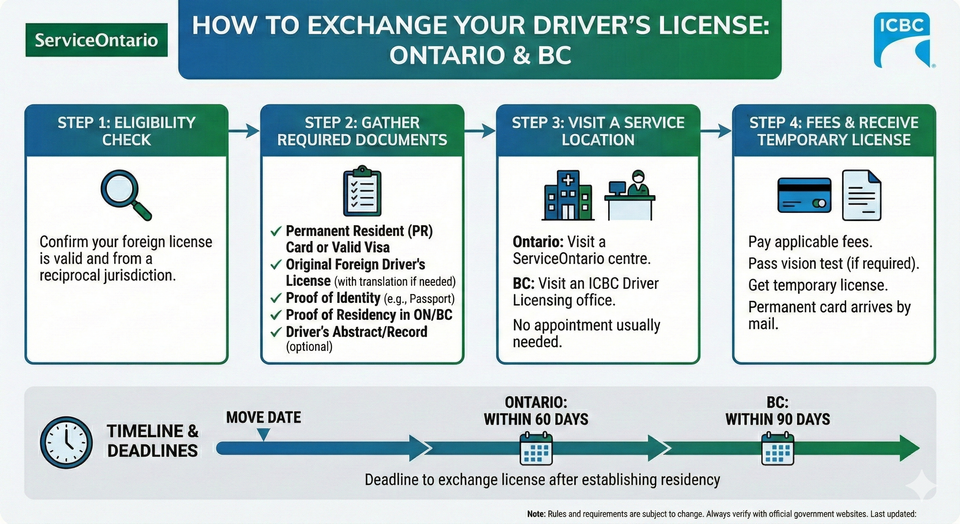
Do not wait. In Canada, you only have a small window—60 days in Ontario and 90 days in British Columbia—to use your foreign or out-of-province license. If you miss this window, you are technically driving illegally, which can void your insurance and lead to massive fines.
The year 2026 has brought significant changes to how licenses are exchanged, particularly regarding immigration status in Ontario and testing requirements in BC. This guide simplifies these "confusing" government rules into a step-by-step roadmap.
What is a Letter of Authentication?
In Ontario, if you want to skip the mandatory waiting periods of the Graduated Licensing System (GLS), you must prove you have at least 24 months of driving experience within the last three years. While a physical license shows you are a driver, it doesn't always show the original date you were licensed.
The "Experience Trap": If your foreign license was renewed recently, the "Issue Date" on the card might only be 6 months ago. ServiceOntario will look at that and say, "You only have 6 months of experience. You must start at G1."
The Solution: You need a Letter of Authentication (also called a Driver Abstract or Letter of Experience) from your home country’s licensing authority. It must:
- Be on official letterhead.
- Be dated within the last 6 months.
- Clearly state your original date of first being licensed.
- Be in English or French (or accompanied by a certified translation).
For those from non-reciprocal countries like India, Pakistan, or the Philippines, this letter is the difference between getting a full G license in weeks versus waiting two years.
Part 1: Ontario Driver’s License Exchange (2026 Rules)
Ontario has fundamentally updated its "trust" system for 2026. Under the new Bill 60 framework, the Ministry of Transportation (MTO) has streamlined the process for reciprocal countries while tightening security for non-reciprocal applicants.
1. The 60-Day Grace Period
The moment you take up residence in Ontario (signing a lease, getting a job, or receiving Ontario Trillium Benefit (OTB)), you have exactly 60 days to use your foreign license. On day 61, that license is legally invalid for use in Ontario.
2. Reciprocal Countries List (2026)
If your license is from one of these jurisdictions, you can exchange it directly for an Ontario Class G license (if you have 2+ years of experience):
- All Canadian Provinces & Territories
- United States (All 50 states, plus D.C. and Puerto Rico)
- Australia, Austria, Belgium, France, Germany, Great Britain, Isle of Man, Japan, South Korea, Switzerland, Taiwan.
Note: If you are from a reciprocal country but have less than 2 years of experience, you will be issued a G2 license. You can then take the G road test once your total combined experience (foreign + Ontario) equals 24 months.
3. Step-by-Step Ontario Process
- Book Your Appointment: New for 2026, you can book exchange appointments online at 15 dedicated DriveTest hubs (Brampton, Mississauga, Ottawa Walkley, etc.). This is highly recommended to avoid 4-hour walk-in wait times.
- The Vision Test: Every applicant must pass a vision test. If you wear glasses for driving, bring them. If you fail, you must visit an optometrist and return with a completed form.
- Surrender Your License: You must hand over your original foreign license. It will be sent back to the issuing authority or destroyed. You cannot keep both.
- Proof of Identity: You need original documents showing your legal name and date of birth (Passport, PR Card, or Work Permit).
- Pay the Fee: The standard exchange fee is $90.00 for a 5-year license.
Part 2: British Columbia (ICBC) 2026 Reforms
British Columbia's licensing body, ICBC, is often considered stricter than Ontario's, especially regarding "driving record" proof.
1. The 90-Day Rule
In BC, you have 90 days to switch. However, there is a catch: if you are a tourist or a full-time student at a "designated institution," you may be exempt and can drive on your foreign license for longer. Once you become a permanent resident or start a long-term work contract, the 90-day clock begins.
2. The New 2026 "No Second Test" Rule for Class 7
In a massive policy shift in June 2026, ICBC now allows drivers with a clean record on their Class 7 Novice (N) license to automatically graduate to a Class 5 Full License after 24 months without a second road test.
For Newcomers: This means if you are from a reciprocal country and get an "N" license because you have less than 2 years of experience, you might not have to take a road test later if your driving record remains spotless.
3. BC Reciprocal Jurisdictions (2026)
BC’s list mirrors Ontario’s but often includes specific motorcycle reciprocity (Class 6) for countries like the UK and Germany.
- Reciprocal: USA, Austria, Australia, Belgium, France, Germany, Japan, Netherlands, South Korea, Switzerland, Taiwan, United Kingdom.
4. Step-by-Step BC Process
- Find an ICBC Office: Most ICBC Driver Licensing centers accept appointments via the ICBC website.
- Bring Two Pieces of ID: BC is strict on ID. One must be a "Primary ID" (e.g., PR card, Canadian birth certificate) and the other a "Secondary ID" (e.g., Bank card, Student ID).
- Driving History: Like Ontario, you need a driver's abstract or letter of experience to skip the Graduated Licensing Program.
- Pay the Fee: A 5-year license renewal/exchange is $75.00.
Comparison Table: Ontario vs. British Columbia
| Feature | Ontario (DriveTest) | British Columbia (ICBC) |
| Exchange Deadline | 60 Days | 90 Days |
| Testing | Vision Test only (Reciprocal) | Vision Test only (Reciprocal) |
| Fees (2026) | $90.00 | $75.00 |
| Letter of Experience | Highly Recommended | Mandatory for full credit |
| Online Booking | Available at 15 hubs | Available at all offices |
| Graduated License | G1 -> G2 -> G | L -> N -> Class 5 |
Skip the Wait Times
How to get a full G or Class 5 license immediately in 2026: You must provide a Letter of Authentication from your original licensing authority dated within the last 6 months. This letter must prove at least 24 months of driving experience. Without this letter, even if you are a veteran driver, you may be forced into a G2 or "N" license, which carries restrictions on passengers and blood-alcohol levels.
Common Pitfalls to Avoid
1. The Translation Error
If your license is not in English or French, you cannot just use a friend's translation. It must be from an MTO-approved (Ontario) or ICBC-approved (BC) translator. In Ontario, this usually means an ATIO-certified translator.
2. Missing the "Lien" or "Debt" Connection
In 2026, ServiceOntario has started flagging drivers who have outstanding fines or debts to the province (like unpaid tolls on the 407 or outstanding GST/HST Credit overpayments). You must clear these debts before they will issue a new license.
3. The "Surrender" Surprise
Many newcomers are shocked when the agent takes their home-country license. They often want to keep it for when they travel back home. You cannot. Canadian law permits you to hold only one driver's license at a time. If you need to drive back home, your Canadian license is valid in most countries (often with an International Driving Permit).
Frequently Asked Questions (FAQ)
Q: Can international students drive on their foreign license?
A: In BC, yes, for as long as you are a full-time student. In Ontario, the law is murkier; officially, you have 60 days, but many students drive longer. To be safe and ensure insurance coverage, getting an Ontario license is highly recommended.
Q: What if I am from a non-reciprocal country (e.g., India, Philippines, Nigeria)?
A: You must take the Written Knowledge Test first. If you have a Letter of Authentication proving 2+ years of experience, you can then book your G Road Test (Ontario) or Class 5 Road Test (BC) immediately, skipping the 12-month wait.
Q: Will a foreign license help lower my insurance?
A: Only if you provide a Claims History Letter from your previous insurance company. The driver's license exchange only proves you can drive; the insurance letter proves you drive safely.
Q: Is "No Name Mobile" or other budget carriers accepted as proof of residence?
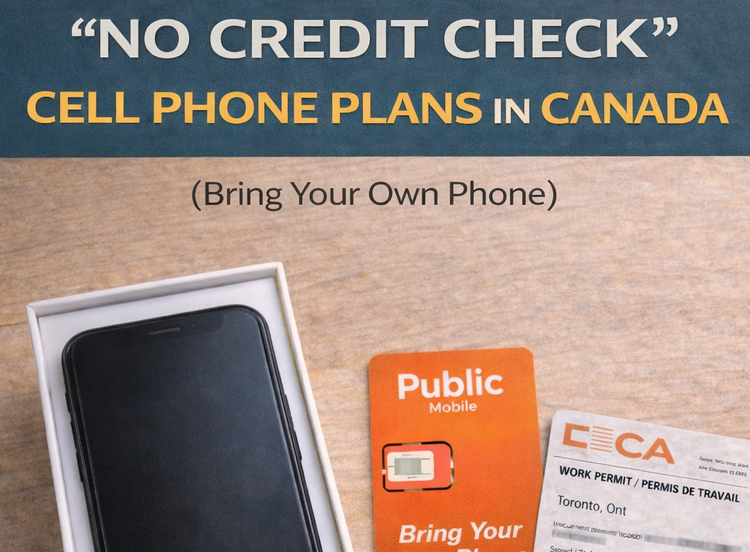
A: Yes, a cell phone bill from a Canadian provider is a valid secondary proof of residence. If you don't have a plan yet, check our guide on No Credit Check Cell Phone Plans to get a bill in your name quickly.
Q: What is the 2026 "Digital License" update?
A: Ontario is currently piloting a digital driver's license that sits in your "Ontario Wallet" app. However, for a license exchange, you still must visit a physical location to surrender your old card.
About the Author
Jeff Calixte (MC Yow-Z) is a Canadian career researcher and digital entrepreneur who studies hiring trends, labour market data, and real entry-level opportunities across Canada. He specializes in simplifying the job search for newcomers, students, and workers using practical, up-to-date information.
Sources
- ServiceOntario: Official Driver’s License Exchange Portal 2026
- ICBC: Moving to BC - Licensing Requirements
- DriveTest Ontario: Foreign License Experience Credits
- MTO: Bill 60 - Strengthening Road Safety Act
Note
Official 2026 payment dates and benefit amounts are determined by the Canada Revenue Agency (CRA) and provincial governments. While we strive to keep this information current, government policies and schedules are subject to change without notice. All data in this guide is verified against official CRA circulars at the time of publication and should be treated as an estimate. We recommend confirming the status of your personal file directly via CRA My Account or by calling the CRA benefit line at 1-800-387-1193.