
Free Mental Health Services 2026: OHIP & MSP Coverage Guide
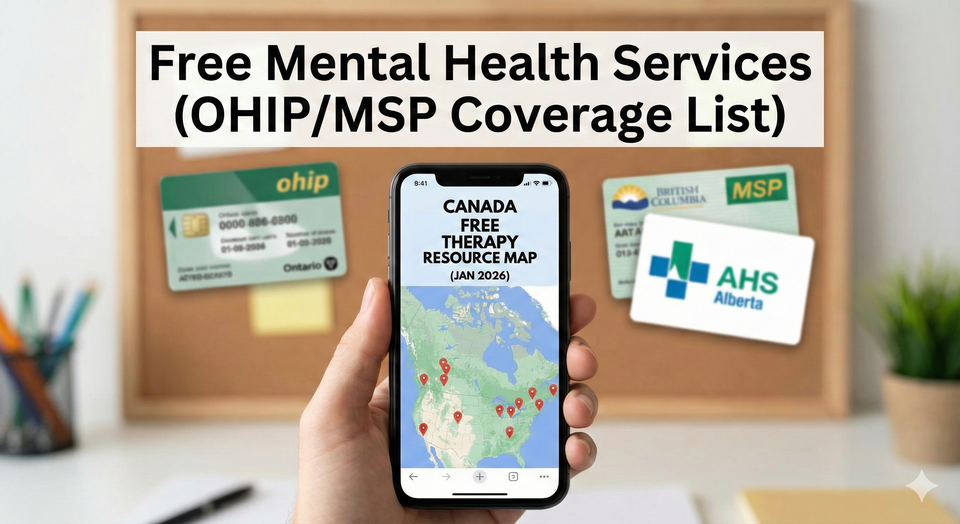
In 2026, the demand for mental health support in Canada has reached critical levels, yet confusion remains over what is actually "free." Many Canadians operate under the misconception that therapy is reserved for those with premium employer benefits or deep pockets.
While private psychology is costly, the public system in 2026 offers several robust, provincial-covered pathways (OHIP, MSP, AHS) that provide evidence-based care at no cost to the patient. If you are unable to work due to these challenges, you should also review the rules for EI Sickness Benefits to ensure your income is protected while you seek treatment.
New initiatives, such as the Ontario Structured Psychotherapy (OSP) program and BC's Plan G coverage, have shifted the focus toward rapid-access care. Whether you require immediate crisis intervention or structured Cognitive-Behavioural Therapy (CBT), the 2026 safety net is designed to catch those at risk of falling through the cracks.
This guide breaks down exactly which services are covered by your provincial health card and how to access "Zero-Cost" counseling without a 6-month wait.
1. Ontario: The OSP and OHIP Advantage
In Ontario, publicly funded therapy is primarily delivered through hospital-based clinics and the expanded Ontario Structured Psychotherapy (OSP) program.
What OHIP Covers:
- Psychiatrists: As medical doctors, their services are 100% covered by OHIP. However, access typically requires a referral from a family physician or walk-in clinic.
- Hospital Outpatient Programs: Short-term counseling provided within a hospital setting is fully covered.
- OSP Program (The Gold Standard): This program provides free, structured Cognitive-Behavioural Therapy (CBT) for adults with depression or anxiety.
- Access: You can often self-refer through your regional OSP network (e.g., CAMH, Royal Ottawa) without seeing a doctor first.
2026 Rapid-Access Resources:
- BounceBack Ontario: A guided self-help program using workbooks and telephone coaching for ages 15+.
- ConnexOntario: A 24/7 helpline (1-866-531-2600) that acts as a central navigation hub to find local mental health and addiction services.
2. British Columbia: MSP and Medication Coverage
BC offers a unique combination of therapy access and medication coverage through the Medical Services Plan (MSP).
What MSP Covers:
- Mental Health Centres: Services provided through local Health Authorities (e.g., Vancouver Coastal Health) are fully covered.
- Plan G (Psychiatric Medications): This is a critical coverage plan that pays 100% of the cost for many psychiatric medications for residents where cost is a barrier. Coverage is typically valid for one year and is renewable.
The "No-Barrier" Option: Moving Forward Family Services
For those facing long wait times in the public system, Moving Forward Family Services is a key resource.
- The Model: They offer free short-term and highly affordable long-term counseling across BC.
- Access: By utilizing supervised interns and registered therapists, they provide a "low-barrier" intake process specifically designed for those without private insurance.
3. Alberta: Access Mental Health & AHS
Alberta delivers free services primarily through the centralized Alberta Health Services (AHS) network.
The AHS Access System:
- Access Mental Health: A centralized intake line (403-943-1500 in Calgary) that assesses your clinical needs and refers you directly to the appropriate public program.
- Counselling Alberta: A partnership offering affordable and often free same-day virtual appointments province-wide (1-833-827-4230).
- Distress Centre: Provides up to six free sessions of short-term crisis counseling for immediate stabilization.
Street Strategies & Common "Traps" Explained
Navigating the mental health system can be confusing. Here is the technical breakdown of common "Street Strategies" for accessing care in 2026.
1. Is there a "Medication Hack" for Plan G?
It is not a "hack," but a specialized application process. In BC, if you cannot afford your psychiatric medication, your doctor can apply for Plan G on your behalf. You do not need to be on Income Assistance to qualify; you only need to demonstrate that the cost of medication is a barrier. For families already struggling with daily costs, we recommend checking our full list of Financial Help for Low-Income Families to see what other support is available.
2. The "Emergency Room" Pathway
Myth: "I should go to the ER for therapy."
Fact: Emergency Rooms are for immediate crisis stabilization (danger to self or others). They are not for ongoing therapy. However, visiting an ER during a crisis is often the fastest way to get a referral to a hospital-based outpatient program, bypassing the 6-month waitlist for a community psychiatrist.
3. Getting "Free" Psychologists
The Strategy: Private psychologists are not covered by health cards. However, if a psychologist works within a Family Health Team (FHT) or a Community Health Centre (CHC), their salary is paid by the government, making the service free for you. Ask your family doctor if their practice includes an "in-house" mental health worker.
4. Tax Credits for Long-Term Conditions
If your mental health condition is severe and prolonged, you may be missing out on significant tax relief. The Disability Tax Credit for Mental Functions can provide retroactive payments if your condition affects your daily life. Similarly, if you are caring for a loved one with mental health challenges, check your eligibility for the Canada Caregiver Credit.
Frequently Asked Questions (FAQ)
Q: Do I need a doctor's referral to get free therapy?
A: It depends. To see a psychiatrist (for diagnosis or medication), yes, a referral is required. However, for programs like OSP (Ontario) or Counselling Alberta, you can often self-refer online or by phone.
Q: Are private psychologists covered by OHIP/MSP?
A: No. Psychologists in private practice bill directly to the patient or private insurance. They are only covered if they are employed by a hospital, school, or government agency.
Q: Can I get help if I am a newcomer/refugee?
A: Yes. The Interim Federal Health Program (IFHP) covers basic mental health services for refugees. Additionally, agencies like Moving Forward Family Services in BC offer support in multiple languages specifically for newcomers without full provincial coverage.
About the Author
Jeff Calixte (MC Yow-Z) is a Canadian labour market researcher and digital entrepreneur specializing in government benefit data and cost-of-living support. As the founder of CanadaPaymentDates.ca and BetterPayJobs.ca, Jeff helps newcomers, students, and workers navigate the Canadian social safety net—from tracking CRA payment schedules to identifying emergency financial resources.
Sources
- Ontario Health: Ontario Structured Psychotherapy (OSP) Program - Official Page
- Government of BC: Plan G - Psychiatric Medication Coverage (Residents Page)
- Alberta Health Services: Access Addiction & Mental Health (Intake Numbers)
- Government of Canada: 9-8-8 Suicide Crisis Helpline (National Portal)
- Moving Forward Family Services: Free & Low-Cost Counselling (National)
If you or someone you know is in immediate danger, please call 9-1-1 or visit the nearest emergency room immediately. You can also dial 9-8-8 anywhere in Canada for 24/7 suicide crisis support. The information in this guide is for educational purposes only and does not constitute medical advice. Eligibility for provincial coverage programs is subject to change by government health authorities.
Note
Eligibility for social programs, grants, and community support is determined by local municipalities and charitable organizations. Funding availability is subject to change without notice. This guide is a directory of resources verified at the time of publication. We recommend contacting the specific agency or food bank directly to confirm operating hours and intake requirements before visiting.