Renovictions Explained: How to Fight an N13 Eviction Notice
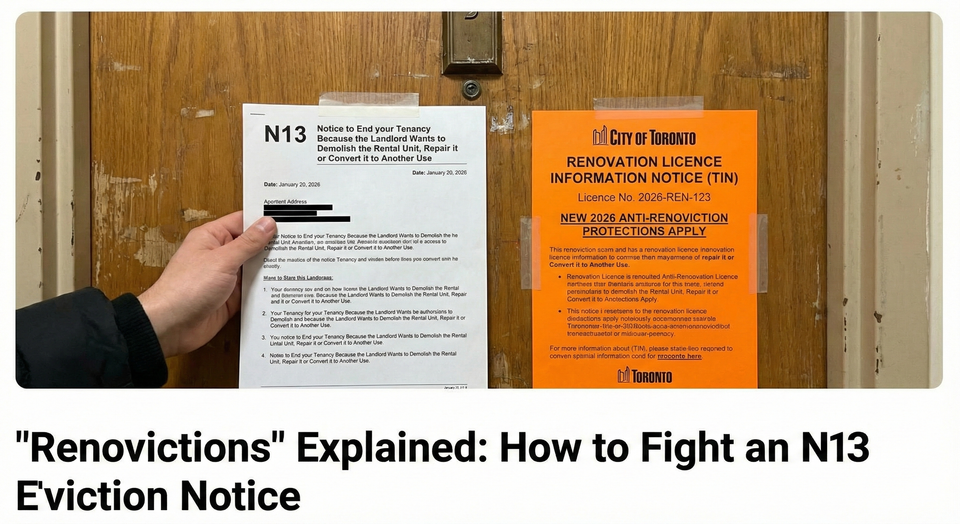
In 2026, the term "renoviction" has become a flashpoint in the Canadian housing crisis. As market rents in cities like Toronto, Ottawa, and Hamilton continue to dwarf what long-term tenants are paying, some landlords are turning to the N13 Notice as a tool to bypass rent control. By claiming they need "vacant possession" to perform major repairs or renovations, they attempt to end tenancies, only to relist the units at double the price a few months later.
However, the legal landscape shifted significantly as we entered 2026. Municipalities have pushed back against the provincial Landlord and Tenant Board (LTB) backlog by implementing their own "Anti-Renoviction Bylaws." From the Toronto Rental Renovation Licence to the Hamilton Renovation Licence and Relocation Bylaw, tenants now have more "teeth" to fight back than ever before.
This master guide provides a breakdown of how to handle an N13 notice, why you must never sign an N11, and how to secure the compensation you are legally owed. It is a critical component of our Ultimate Guide to Renting in Canada's Housing Crisis (2026).
What is an N13 Notice? (The Legal Definition)
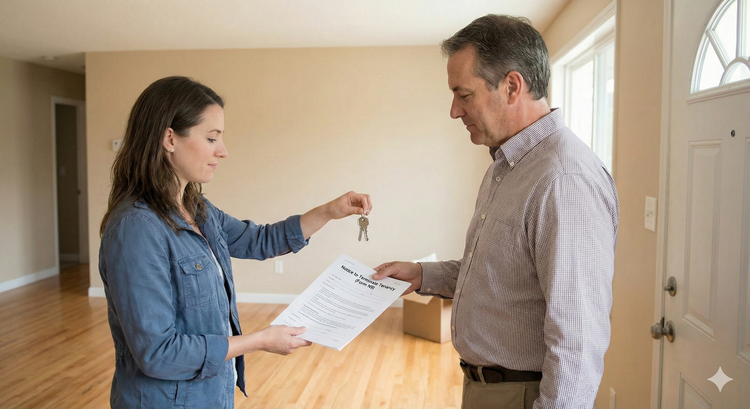
An N13 is a formal notice titled "Notice to End your Tenancy Because the Landlord Wants to Demolish the Rental Unit, Repair it or Convert it to Another Use." In 2026, for a landlord to successfully evict you for renovations (Reason 2 on the form), they must prove three things to the LTB:
- Extensive Work: The repairs must be so extensive that they require a building permit.
- Vacant Possession: The work cannot reasonably be done while you are living there.
- Good Faith: The landlord must truly intend to do the work, not just use it as a "smokescreen" to get you out.
The 120-Day Rule
A landlord must give you at least 120 days' notice before the termination date on the N13. That date must fall on the last day of your rental period (usually the end of the month) or the last day of your fixed-term lease. If you receive an N13 in January 2026, you cannot be forced to move before May 31, 2026.
The N11 Trap: Why Landlords Want You to Sign
If your landlord approaches you with an N11 (Agreement to End Tenancy) instead of an N13, they are likely trying to save money.
- The N13 requires compensation: If you are in a building with 5+ units, the landlord must pay you 3 months' rent by law.
- The N13 grants the "Right of First Refusal": You have the legal right to move back in at the same rent you pay now.
- The N11 voids these rights: Once you sign an N11, you are "voluntarily" leaving. You lose your right to return and your right to the 3-month compensation.
The Rule for 2026: Never sign an N11 unless you are being offered a significant Cash for Keys buyout that exceeds the value of staying in your rent-controlled home.
The 2026 Anti-Renoviction Bylaws: Your New Shield
As of January 2026, several major Ontario cities have implemented municipal laws that make the N13 process much harder for "bad faith" landlords.
1. Toronto’s Rental Renovation Licence (Bill 2025)
If you live in Toronto in 2026, your landlord can no longer just hand you an N13 and wait for an LTB hearing.
- The Licence: Landlords must apply for a $700 Rental Renovation Licence per unit within 7 days of issuing an N13.
- The Professional Report: They must submit a report from a qualified professional (architect or engineer) proving that the unit must be vacant for the work.
- The TIN: They must post a "Tenant Information Notice" (TIN) on your door, informing you of your rights.
2. Hamilton’s "Rent-Gap" Payments
Hamilton’s bylaw is even stricter. If you exercise your "Right of First Refusal" to move back in, the landlord may be required to pay Rent-Gap Payments. This means if you have to pay $2,000 for a temporary rental while your $1,200 unit is being fixed, the landlord must pay the $800 difference every month.
Part 1: How to Fight the N13 Notice
If you receive an N13, you do not have to move out. Only an order from the Landlord and Tenant Board can evict you.
Step 1: Check for Building Permits
Go to your city’s online building permit portal (e.g., Toronto Building Permit Search) and look up your address. If there is no permit for "Major Renovations" or "Structural Alterations," the N13 is likely in bad faith. A permit for "Painting" or "New Flooring" is not enough to evict a tenant.
Step 2: The "Right of First Refusal" Letter
If you decide to move out temporarily, you must give the landlord a written letter (sent via registered mail) before you vacate.
"I, [Name], am exercising my Right of First Refusal under Section 53 of the RTA. I intend to re-occupy the unit at [Address] once the renovations are complete at my current rent of $[Amount]."
Step 3: Collect Your Compensation
By the termination date on the N13, the landlord must pay you:
- Buildings with 5+ units: 3 months' rent.
- Buildings with <5 units: 1 month's rent.If they do not pay this by the date on the form, the eviction application is void, and the LTB will dismiss their case. If you are relying on your Ontario Works payment to bridge the gap, this extra compensation is a vital safety net.
Part 2: What to Do if the Landlord Relists the Unit
If you move out and then see your apartment on Kijiji or Zillow for a higher price, you have been "Renovicted" in bad faith.
- Take Screenshots: Save the listing immediately.
- File a T5 Application: You have up to two years from the date you moved out to file a T5 (Landlord Gave a Notice of Termination in Bad Faith).
- The 2026 Penalties: In 2026, the LTB can order the landlord to pay you up to 12 months of rent in general compensation, plus your moving costs and the difference in rent at your new place for one year.
The biggest "Street Secret" for 2026 is using the Municipal Renovation Licence as leverage during an LTB hearing. Because the LTB is a provincial body, they often ignore municipal bylaws. However, a tenant who can prove a landlord failed to get a required city licence (like the $700 Toronto fee) can argue that the landlord is not acting in "good faith" or following "all legal requirements."
The "Extensive" Definition
What counts as "so extensive that it requires vacant possession"? In 2026, the courts have become stricter. If a landlord wants to replace a kitchen and a bathroom, a tenant can argue that this can be done while they stay in a hotel for 5 days, or even while they remain in the unit with a temporary kitchenette.
- The Hack: Ask for the "Scope of Work" and the "Work Schedule." If the schedule shows that the "noisy" work is only for 2 weeks, you can argue at the LTB that an eviction is an "extreme and unnecessary" measure.
The "Professional Report" Shield
Under the 2026 Toronto and Hamilton bylaws, a landlord must provide a report from a "Qualified Person" identifying why the unit must be empty.
- The Defense: You have the right to challenge this report. If the landlord’s cousin (a general contractor) wrote the report, it carries less weight than an independent structural engineer. If you suspect the report is a lie, you can call the City’s Renoviction Licensing Team to ask for an inspection.
Tracking the "Right of First Refusal"
The biggest mistake tenants make is losing contact with the landlord. In 2026, landlords "forget" to tell tenants when the work is done.
- The Strategy: Every 30 days, send an email: "Checking in on the renovation progress at [Address]. Please provide the estimated re-occupation date." * The Payoff: If they don't respond and you find a new tenant in your unit, these emails are your "Smoking Gun" in a T5 bad-faith hearing. It proves you were ready, willing, and able to return, but the landlord blocked you.
Managing Finances During Displacement
Moving is expensive. If you are waiting for an LTB hearing, ensure your Benefit Payment Dates are aligned so you have the funds for a legal rent deposit on a temporary unit. If the landlord has not paid your 3-month compensation, do not move. Stay in the unit until the LTB hearing—the current 2026 backlog means you could have 6 to 9 months of extra time to save money before a decision is reached.
Fighting Renoviction Ontario
To fight a renoviction in Ontario in 2026: Do not sign an N11 form. A landlord must give you an N13 notice with 120 days' notice and pay you 1–3 months' rent in compensation. If you live in Toronto or Hamilton, the landlord must also obtain a municipal Renovation Licence. You have the legal Right of First Refusal to move back in at the same rent once the work is done. If the landlord fails to offer the unit back, you can file a T5 application for up to 12 months' rent in compensation.
Frequently Asked Questions (FAQ)
Q: Can I stop the renovations from happening?
A: No, a landlord has the right to maintain their property. You can only stop the eviction if the work can be done while you are living there or if the landlord is acting in bad faith.
Q: Does the landlord have to pay for my hotel?
A: Under the RTA, no. They only have to pay the 1–3 months' compensation. However, under the 2026 Hamilton and Toronto bylaws, they may be required to provide "comparable accommodation" or "rent-gap payments."
Q: What if the building is being demolished?
A: This is Reason 1 on the N13. The rules for compensation are the same (3 months' rent for 5+ units), but you obviously lose your "Right of First Refusal" because the unit will no longer exist.
Q: My landlord offered me $5,000 to sign an N11. Should I take it?
A: Only if it makes financial sense. If your rent is $1,500 and a new place is $2,500, that $5,000 will be gone in 5 months. Use our "Cash for Keys" Negotiation Guide to calculate a fair buyout.
About the Author
Jeff Calixte (MC Yow-Z) is a Canadian labour market researcher and digital entrepreneur specializing in government benefit data and cost-of-living support. As the founder of CanadaPaymentDates.ca and BetterPayJobs.ca, Jeff helps newcomers, students, and workers navigate the Canadian social safety net—from tracking CRA payment schedules to finding entry-level work.
Sources
- Tribunals Ontario: Interpretation Guideline 12: Eviction for Personal Use, Demolition, or Repair
- City of Toronto: Rental Renovation Licence Bylaw (Renovictions Bylaw) 2026
- City of Hamilton: Renovation Licence and Relocation Bylaw 24-055
- CLEO: Renovictions - Your Rights and the N13 Process
Note Rental laws and eviction guidelines are determined by provincial bodies (such as the LTB in Ontario or the RTB in BC) and are subject to legislative change. This guide provides a summary of current tenant rights for educational purposes and does not constitute legal advice. For specific disputes, we recommend contacting your provincial Legal Aid office or a licensed paralegal before signing any documents.