
Maternity vs. Parental Leave: Can the Dad Take the Extra Weeks?
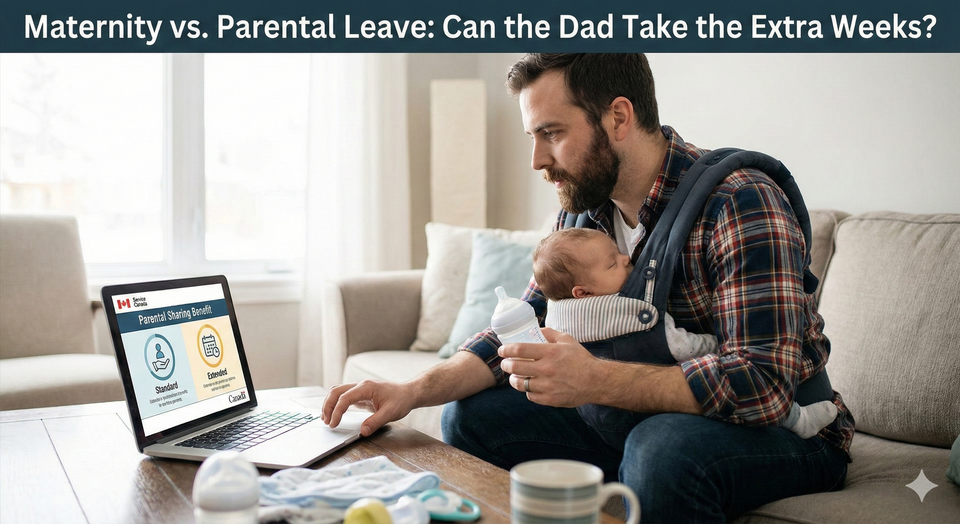
For decades, the Standard Canadian maternity leave was seen as a solo journey for the mother. But in 2026, the system has evolved into a high-flexibility model designed to encourage both parents to be present in those critical first months. The biggest point of confusion for new families is the distinction between Maternity Benefits (for the person giving birth) and Parental Benefits (which can be shared).
The game-changer for 2026 is the Parental Sharing Benefit. This "Use It or Lose It" provision was designed specifically to get more dads and non-birthing partners involved. It doesn't just "split" the existing pot of time—it actually adds extra weeks to your total leave, provided that both parents take at least some time off. If the second parent doesn't take those weeks, they simply vanish.
As part of our Employment Insurance Master Guide, this article breaks down the 2026 "Daddy Days" math, compares Standard vs. Extended options, and reveals the "Street Hacks" to maximize your family’s total paid time off.
1. Maternity vs. Parental: Who Gets What?
It is vital to understand that these are two separate "buckets" of money.
- Maternity Benefits (15 Weeks): Only for the person who is pregnant or has recently given birth. It covers the physical recovery from childbirth and cannot be shared with the other parent.
- Parental Benefits (35–61 Weeks): For both parents. These weeks can be shared however you like. In 2026, you must choose between the Standard or Extended option at the start of your claim.
2026 Maximum Weekly Rates
| Benefit Type | Percent of Pay | 2026 Max Weekly Check |
| Maternity | 55% | $729 |
| Standard Parental | 55% | $729 |
| Extended Parental | 33% | $437 |
MORE HELPFUL ARTICLES FROM US
- Canada Payment Guide (Browse All Payments )
- Can I Get EI if I Quit? (Just Cause Checklist)
- TFSA vs. RRSP for Low Income (The GIS Trap)
- Shared Custody CCB Rules (50/50 Split Guide)
- Warm Neighbor Programs (Heating Bill Help)
2. The Use It or Lose It Bonus: The Dad Hack (Answer Target)
Can the dad take extra weeks of parental leave in 2026? Yes. Under the Parental Sharing Benefit, if parents share the leave, they qualify for extra "bonus" weeks. In the Standard Option, the family gets 5 extra weeks (40 total), but one parent cannot take more than 35. In the Extended Option, the family gets 8 extra weeks (69 total), but one parent cannot take more than 61. These extra weeks are "use it or lose it"—if the second parent doesn't take at least 5 or 8 weeks respectively, the bonus time is lost to the family.
Parental Sharing Hacks
This deep dive reveals the "Family Engineering" strategies to get the most out of Service Canada in 2026.
1. The "Concurrent Leave" Strategy
Can parents take parental leave at the same time.
- The Street Angle: Most people think one parent must finish before the next begins.
- The Hack: You can both be on leave at the same time.
- The Strategy: For many families, the first 5 weeks are the hardest. By using the "Standard" option, the dad can take his 5 "Bonus Weeks" exactly when the baby is born.
- The Payoff: The mother gets her 15 weeks of maternity + 35 weeks of parental, and the dad gets 5 weeks of parental. For those 5 weeks, the household receives two EI checks simultaneously (up to $1,458/week combined).
2. The "18-Month" Cash Flow Trap
Many users search for "extended parental leave vs standard 2026."
- The Street Angle: 18 months sounds better than 12 months.
- The Trap: You get the same total amount of money, just spread thinner.
- The Math: Standard pays 55% ($729 max). Extended pays 33% ($437 max).
- The Strategy: If you choose Extended but decide to go back to work after 14 months, you cannot switch back to the higher Standard rate. You lose the remaining money.
- The Move: Unless you are 100% certain you will stay home for the full 18 months, choose the Standard option. You can always take "Unpaid Leave" from your employer after the 12 months of EI run out, but you’ll have already received your full EI entitlement at the higher rate.
3. The 600-Hour Second Parent Qualification
A rising query in 2026 is "does dad need hours for parental leave."
- The Hack: Yes. Each parent is evaluated individually.
- The Requirement: To get the bonus weeks, the second parent must also have 600 insurable hours in the last 52 weeks.
- The Move: If the dad is a freelancer or self-employed and hasn't paid into EI, he cannot claim the 5 or 8 bonus weeks. If you are planning a family in 2026, ensure the second parent is in "insurable employment" (a regular T4 job) long enough to hit that 600-hour mark.
4. The Employer Top-Up Optimization
Many professionals search for "paternity leave top up rules 2026."
- The Street Angle: Some companies (especially in tech or government) offer "Top-Ups" where they pay the difference between EI and your full salary.
- The Hack: Top-ups are often separate for maternity and parental leave.
- The Strategy: Check your contract. Some employers offer a 95% top-up for 15 weeks of maternity, but only 10 weeks of parental.
- The Move: If the dad’s employer offers a better parental top-up than the mom’s, have the mom take the 15 weeks of maternity, then have the dad take the majority of the parental weeks. This maximizes the total "Real Dollars" coming into the house.
5. Quebec: The QPIP Exception
If you live in Quebec, search for "QPIP vs EI parental leave 2026."
- The Difference: Quebec is the only province with its own system (QPIP).
- The Hack: It is significantly more generous. Dads in Quebec get a dedicated Paternity Leave (3 to 5 weeks) that is completely separate from the shared parental weeks.
- The Result: Quebec fathers have the highest participation rate in Canada because the replacement rate is often 70% to 75% of salary, rather than the 55% federal rate.
4. Summary Table: Standard vs. Extended Sharing (2026)
| Feature | Standard Option | Extended Option |
| Max Shareable Weeks | 35 Weeks | 61 Weeks |
| "Bonus" Weeks (Sharing) | 5 Weeks | 8 Weeks |
| Total Family Weeks | 40 Weeks | 69 Weeks |
| Max for One Parent | 35 Weeks | 61 Weeks |
| Weekly Payment (Max) | $729 | $437 |
| Timeframe to Use | 52 Weeks (1 Year) | 78 Weeks (1.5 Years) |
Parental Sharing Benefit 2026
How do the extra "daddy weeks" for parental leave work in Canada for 2026? Under the EI Parental Sharing Benefit, families that share parental leave receive extra paid weeks. If you choose the Standard option, you get 5 extra weeks (totaling 40), but one parent can claim no more than 35. If you choose the Extended option, you get 8 extra weeks (totaling 69), but one parent can claim no more than 61. These bonus weeks are a "use it or lose it" benefit for the second parent and do not reduce the weeks available to the birthing parent.
Frequently Asked Questions (FAQ)
Q: Do we have to take the weeks at the same time?
A: No. You can take them together, one after the other, or even split them up. For example, the dad could take 2 weeks when the baby is born and the remaining 3 weeks at the end of the year to help with the transition back to daycare.
Q: Can same-sex partners or adoptive parents get the bonus?
A: Yes. The Parental Sharing Benefit is available to all eligible parents, including biological, adoptive, and same-sex parents.
Q: What if I’m a single parent?
A: Unfortunately, the 5 or 8 "bonus" weeks are only available to families where the leave is shared between two parents. A single parent is limited to the standard 35 weeks (or 61 extended weeks) of parental benefits.
Q: Does my employer have to let me take the extra weeks?
A: Yes. Provincial employment standards (like the Ontario ESA) protect your right to take parental leave. As long as you give the required notice (usually 2 to 4 weeks), your job is protected while you are on Service Canada benefits.
About the Author
Jeff Calixte (MC Yow-Z) is a Canadian labour market researcher and digital entrepreneur specializing in government benefit data and cost-of-living support. As the founder of CanadaPaymentDates.ca and BetterPayJobs.ca, Jeff helps newcomers, students, and workers navigate the Canadian social safety net—from tracking CRA payment schedules to finding entry-level work.
Sources
- Service Canada: EI maternity and parental benefits - Overview
- Government of Canada: Parental Sharing Benefit - Backgrounder
- Employment Standards Act: Parental Leave Rights by Province
Note
Employment Insurance (EI) eligibility and benefit rates are determined by Employment and Social Development Canada (ESDC). Policies regarding earnings exemptions, severance, and training referrals are subject to change. All data in this guide is verified against official Service Canada circulars. We recommend confirming the status of your personal claim directly via My Service Canada Account (MSCA) or by calling the EI telephone reporting service at 1-800-206-7218.