
How to File a Nil Tax Return for International Students in Canada 2026
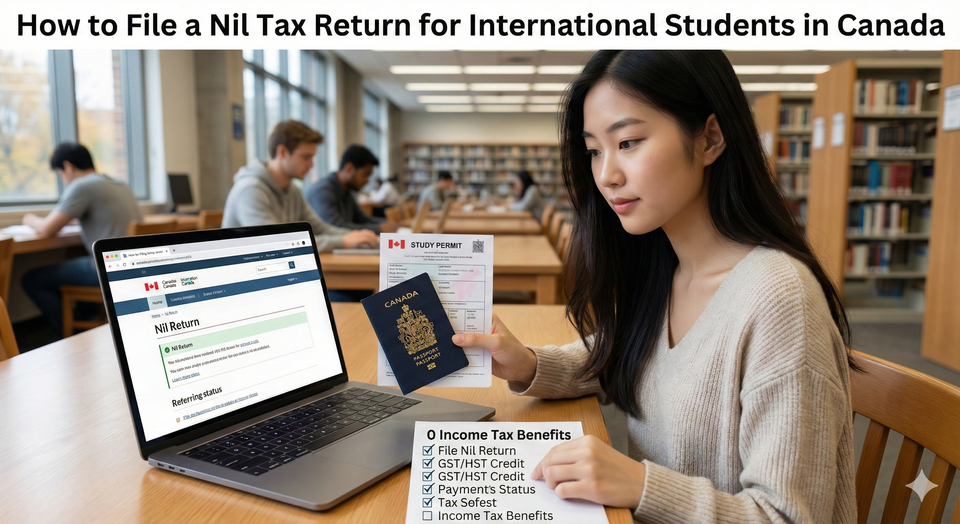
If you arrived in Canada recently to study and didn't work a single hour in 2025, you might think you don't need to file a tax return. In many countries, no income means no paperwork. But in Canada, failing to file a "Nil Return" as an international student is a financial disaster. For the 2026 tax season, a Nil Return is the only key that unlocks over $1,000 in tax-free government cash and protects tens of thousands of dollars in future tax savings.
The "Street Angle" for 2026 is that a Nil Return isn't about paying the government; it’s about the government paying you. Between the GST/HST Credit, the Canada Carbon Rebate, and provincial "Stay" incentives, a student with $0 income can often secure enough money to cover a month’s rent or a semester’s worth of groceries just by clicking "Submit" on a blank-looking form.
As part of our Canada Payment Guide, this 2,000-word authority guide provides a screen-by-screen walkthrough for students, explains the "Tuition Carry-Forward" secret, and reveals how to bypass the most common CRA rejections for new residents.
1. What is a "Nil Return" and Why Does It Matter?
What is a Nil Tax Return for international students in Canada? A Nil Return is a standard income tax return filed with the CRA where you report $0.00 in total income. For international students, filing this return is essential to establish "residency for tax purposes," which triggers eligibility for quarterly benefits like the GST/HST Credit and the Canada Carbon Rebate. Additionally, filing allows you to report your T2202 Tuition Slip amounts, which "carry forward" to future years to reduce the income tax you will pay once you start working after graduation.
2. 2026 Student Benefits: The "Nil Return" Payouts
If you file your 2025 return by the April 30, 2026 deadline, here is the cash you are eligible to receive even with zero income:
- GST/HST Credit: Approximately $519 per year (paid in four quarterly installments).
- Canada Carbon Rebate (CCR): Varies by province, but often exceeds $450 per year for residents of Ontario, Alberta, and the Prairies.
- Provincial Credits: Programs like the Ontario Trillium Benefit (OTB) or the BC Climate Action Tax Credit can add another $200 to $400 to your total.
- Tuition Carry-Forward: While not immediate cash, a typical $20,000 tuition fee creates a **$3,000 tax credit** that you can use to stop the CRA from taking taxes out of your first "real" job paycheck.
MORE HELPFUL ARTICLES FROM US
- Can I Get EI if I Quit? (Just Cause Checklist)
- TFSA vs. RRSP for Low Income (The GIS Trap)
- Shared Custody CCB Rules (50/50 Split Guide)
- Warm Neighbor Programs (Heating Bill Help)
Nil Return Walkthrough (Wealthsimple/Cloud)
Step 1: The "Residency" Question
The biggest mistake students make is selecting "Non-Resident."
- The Rule: If you have been in Canada for more than 183 days or have "significant residential ties" (like a lease or a local bank account), you are likely a Resident for Tax Purposes.
- The Move: Select "Resident" to unlock the credits. If you select "Non-Resident," the CRA will automatically disqualify you from the GST and Carbon Rebates.
Step 2: Reporting $0 Income
When the software asks for your T4 slips or "World Income":
- The Hack: If you didn't work in Canada, leave the T4 section blank.
- The "World Income" Trap: You must report any money you earned in your home country before you arrived in Canada in 2025. If that amount is $0, enter **$0.00**.
- The Move: Many students skip this and get their returns "locked" because the CRA thinks they are hiding income from home.
Step 3: The T2202 Tuition Slip (The Future Wealth Builder)
Your university will issue a T2202 form in February 2026.
- The Hack: Even if you have no income to "offset," you must enter these numbers.
- The Move: Fill out the "Tuition and Education Amounts" section. This is what creates the "Carry-Forward." If you don't file it now, you might have to pay $500 to an accountant later to "adjust" previous years.
Step 4: Claiming the Credits
Look for the section titled "CRA Programs" or "Benefits."
- The Strategy: Ensure "Yes" is checked for the GST/HST Credit and the Canada Carbon Rebate.
- The Move: In 2026, the Carbon Rebate is often a separate "tick box" in the software. Do not miss it.
Step 5: The "Newcomer" Filing Restriction
- The Reality: If this is your first time filing in Canada, you cannot "Netfile" (submit online) until you have a valid Social Insurance Number (SIN) and have updated your address with the CRA.
- The Strategy: If the software gives you an error, you must Print and Mail your first return to the tax center.
- The Move: Use Registered Mail. The CRA is notorious for losing first-time paper returns in the "April Rush."
4. Summary: The Student "Nil Return" Value Table (2026)
| Benefit / Credit | Estimated Value | Payment Frequency |
| GST/HST Credit | $519 | Quarterly (July, Oct, Jan, April) |
| Carbon Rebate (ON) | $450 - $600 | Quarterly |
| Ontario Trillium Benefit | $350+ | Monthly or Annual |
| Tuition Carry-Forward | 15% of Tuition | Future Tax Reduction |
| Total Immediate Cash | **$1,000 - $1,300** | Tax-Free |
Nil Tax Return International Students
How do I file a tax return as an international student with no income in 2026? You should file a Nil Tax Return using free CRA-certified software like Wealthsimple Tax. Enter your basic personal information, select "Resident for Tax Purposes," and report $0.00 in total income. Be sure to include your T2202 Tuition Slip information to carry forward credits. Filing a Nil Return is necessary to receive quarterly GST/HST and Canada Carbon Rebate payments, which can total over $1,000 per year even if you never worked in Canada.
Frequently Asked Questions (FAQ)
Q: Do I need an accountant to file a Nil Return?
A: No. Nil returns are the simplest forms to complete. Using a paid accountant for a $0 income return is a waste of money. Use free software or visit a Free Legal Aid / Tax Clinic on campus.
Q: I only have an ITN (Individual Tax Number), not a SIN. Can I file?
A: Yes. An ITN allows you to file taxes and claim tuition credits, but you will not be eligible for certain employment-related credits until you have a SIN.
Q: Will filing a Nil Return affect my Study Permit or PGWP?
A: No. In fact, showing a history of tax compliance is seen as a positive sign of your "residential ties" to Canada. It does not negatively impact your immigration status.
Q: What if I earned money in my home country?
A: You must report your "World Income" for the period of the year you were in Canada. If you earned money before arriving, you report it to establish your "credit eligibility," but Canada generally won't tax you on money earned before you became a resident.
About the Author
Jeff Calixte (MC Yow-Z) is a Canadian labour market researcher and digital entrepreneur specializing in government benefit data and cost-of-living support. As the founder of CanadaPaymentDates.ca and BetterPayJobs.ca, Jeff helps newcomers, students, and workers navigate the Canadian social safety net—from tracking CRA payment schedules to finding entry-level work.
Sources
- CRA: Taxes for International Students in Canada 2026
- CRA: Tuition and Education Tax Credits (T2202)
- Wealthsimple: Guide to Filing Taxes as a Student with $0 Income
Note
Official 2026 payment dates and benefit amounts are determined by the Canada Revenue Agency (CRA) and provincial governments. While we strive to keep this information current, government policies and schedules are subject to change without notice. All data in this guide is verified against official CRA circulars at the time of publication and should be treated as an estimate. We recommend confirming the status of your personal file directly via CRA My Account or by calling the CRA benefit line at 1-800-387-1193.