Renting with a Work Permit: How to Get Approved with No Canadian Credit History
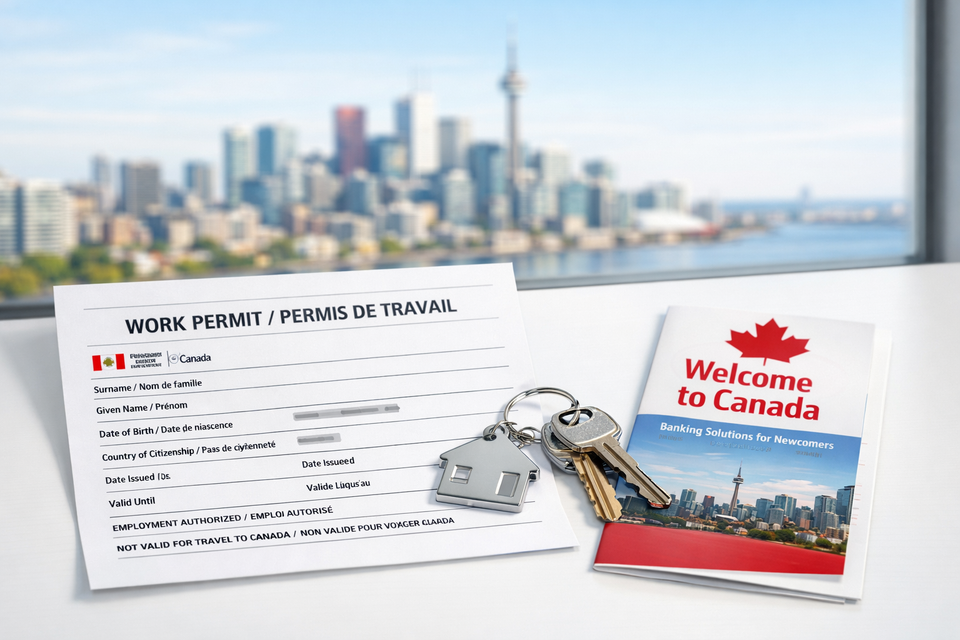
You finally arrived. You have your Work Permit in hand, a Canadian SIN, and a job offer. But when you apply for an apartment in cities like Toronto, Vancouver, or Calgary, the landlord asks for a "Credit Report."1
When you explain that you just arrived and don't have one yet, the conversation usually ends.
For newcomers, the Canadian rental market feels like a "closed club." Corporate property managers often have a "No Credit, No Apartment" policy that feels impossible to break. However, thousands of work permit holders secure high-quality housing every month. They don't do it by having a credit score; they do it by using their Work Permit status as a financial asset.
This is the Newcomer Niche Guide to getting a rental approved with zero Canadian credit history. We will cover the specific documents that replace a credit score, the legalities of rent deposits, and how to "translate" your foreign financial success into a language Canadian landlords understand.
Moving Provinces?
Rental rules vary wildly by province.2 If you are moving to Ontario, make sure to read our specific guide on Private Landlords in Toronto to avoid corporate rejections.
The Work Permit Advantage: You Aren't a "Tourist"
Landlords fear one thing: Risk. They worry you will stop paying rent and flee the country.
A tourist is high risk. An international student is medium risk. A Work Permit holder is often seen as lower risk because you have a legal right to earn income in Canada.
To get approved, you must pivot the conversation away from "Credit" and toward "Stability." Your Work Permit (whether it is an Open Work Permit or Employer-Specific) is proof that the Canadian government has already vetted you and cleared you to work.
Quick Answers: Renting for Newcomers
Can I rent an apartment in Canada with just a work permit?
Yes. While many landlords prefer a Canadian credit score, you can legally rent with a work permit by providing alternative "proof of reliability."3 This includes a Canadian employment letter, bank statements showing 3-6 months of savings, and a foreign credit report from companies like Nova Credit or Equifax from your home country.
How do I build credit while renting on a work permit?
The fastest way to build credit for a future rental application is to open a "Newcomer Banking" account at a major bank (RBC, TD, Scotiabank). These programs often provide an unsecured credit card (up to $2,000 limit) without a credit check. Additionally, using services like TenantPay or Chexy can report your monthly rent payments to the credit bureaus.4
Is it legal for a landlord to ask for 6 months' rent upfront?
In provinces like Ontario, it is illegal for a landlord to demand more than the first and last month’s rent. However, if you have no credit history, you are legally allowed to voluntarily offer more rent upfront to strengthen your application.5 Many newcomers use this strategy to secure competitive apartments.6
The "Newcomer Application" Checklist
Since you cannot provide a credit report (Line 1 of a standard application), you must provide a "package" of documents that makes the landlord feel safe.
You should have these 5 documents ready in a single PDF:
- The Work Permit: A clear photo of your permit. If you have an LMIA-based permit, highlight the employer's name. This shows "Guaranteed" employment.
- The "Letter of Employment": This must be on company letterhead. It should state your Job Title, Annual Salary, and the fact that you have "Permanent, Full-Time" status.
- The "Newcomer Bank Letter": Most Canadian banks (like RBC or CIBC) will provide a letter stating you have opened an account and have "Funds in good standing."
- Foreign Credit History (Nova Credit): If you are from the UK, India, Australia, Mexico, or Brazil, you can use Nova Credit to "transfer" your home country's credit score into a Canadian-equivalent report.
- Character Reference: A letter from a colleague, a local friend, or even your Airbnb host from your first week in Canada.
MORE HELPFUL ARTICLES FROM US
- Can I Get EI if I Quit? (Just Cause Checklist)
- TFSA vs. RRSP for Low Income (The GIS Trap)
- Shared Custody CCB Rules (50/50 Split Guide)
- Warm Neighbor Programs (Heating Bill Help)
Strategy 1: The "Newcomer Banking" Hack
In 2026, the "Big Five" banks (RBC, TD, BMO, Scotiabank, CIBC) are locked in a war for your business.
The Secret: Most newcomers wait until they find a home to fix their banking. Do the opposite.
As soon as you land, go to a bank and join their "Newcomer Advantage" program.7
- The Benefit: They will often give you a credit card with a $1,000 - $5,000 limit immediately, with no credit history required.
- The Rental Use: Having a Canadian credit card—even if the balance is $0—shows the landlord that a major financial institution has already "vetted" you. It adds massive credibility to your rental application.
Strategy 2: Targeting "Individually Owned" Condos
Avoid the giant apartment buildings with "Leasing Offices." These offices are staffed by employees who must follow a handbook. The handbook says "No Credit = Denied."
Instead, look for individual condo owners on sites like Rentals.ca or Zumper.
- These are private investors who own one or two units.
- They are often immigrants themselves or "Mom and Pop" investors.
- They are much more likely to listen to your story and accept a bank statement in place of a credit score.
Strategy 3: The "Rent Guarantee" Services
If you have a good job but a landlord is still hesitant because of your "newness," you can use a professional guarantor service.
In 2026, companies like SingleKey and Locnest act as a "Co-signer" for a fee.
- How it works: You pay them a fee (usually around 1 month's rent).
- The Result: They provide a guarantee to the landlord that if you stop paying, they will pay.
- Why Landlords Love It: It removes 100% of their risk. It is much easier to get a "Yes" when a multi-million dollar company is backing your lease.
The 2026 Shift: Leveraging a "Tenant’s Market"
As we move through 2026, the Canadian rental landscape has shifted significantly. For the first time in years, vacancy rates in major hubs like Toronto, Vancouver, and Calgary have increased (now averaging over 3%). This means that as a work permit holder, you have leverage that newcomers in 2023 or 2024 did not have.
Landlords are now competing for you. Instead of begging for an apartment, you can use these advanced strategies to not only get approved but to get a better deal.
The "One Year Upfront" Discount Hack
While landlords are legally restricted from demanding a year's rent, the "slow market" of 2026 has created a new opportunity. If you have significant savings and choose to offer a large amount upfront (e.g., 6–12 months), do not just give the money away.
The Strategy: Negotiate a 5% to 8% discount on your monthly rent in exchange for the upfront payment. In a market where interest rates are fluctuating, many private landlords prefer the "bird in the hand" cash flow. This can save you $150–$300 per month, effectively paying for your internet or utilities for the entire year.
Using "Nova Credit" to Import Your History
One of the biggest mistakes newcomers make is assuming their home country's financial history is worthless. In 2026, the bridge between international credit and Canadian credit is wider than ever.
The "Nova Credit" Strategy:
If you are from the UK, India, Australia, Brazil, or Mexico, you can use Nova Credit to pull your home country's credit report and "translate" it into a Canadian-equivalent Equifax or TransUnion report.
- Why it works: Corporate landlords who use Equifax can now see your international score as if it were a Canadian one.
- The Result: It removes the "No Credit" label entirely. Instead of being a "risk," you are a "known quantity."
Pro Tip: While you are settling in and waiting for your first paycheck, make sure you are tracking your CRA Master Payment Calendar. Newcomers often qualify for the Carbon Rebate and GST credit immediately, which provides a small but helpful cushion during your first 90 days.
The "Executive Furnished" Short-Term Bridge
If you find that traditional landlords are still being too rigid, look for Furnished Executive Rentals. These are often marketed to corporate relocations and business travelers.
- The Benefit: They often accept credit cards for payment.
- The Hack: By paying your first 2–3 months of rent on a Canadian credit card (which you should get from a "Newcomer Banking" program immediately upon landing), you are effectively building your credit score through your largest expense.
- The Long-Game: After 3 months in an executive suite, you will have a Canadian credit score, a Canadian bank statement, and local references. You can then move into a standard, cheaper apartment with a "Perfect" application.
Rent Reporting Services: Make Your Rent Work for You
In the past, paying rent did nothing for your credit score. In 2026, that is no longer true. Services like Neobanc or Borrowell Rent Advantage allow you to report your monthly rent payments directly to Equifax.
Why this is a 7-day win:
By showing a landlord that you are enrolled in a rent-reporting service, you are telling them: "I am so confident I will pay on time that I am letting the credit bureau track it." Landlords love this because it gives them a "stick" (the threat of a bad credit report) to ensure you stay reliable.
Identifying "Newcomer-Friendly" Buildings
Not all buildings are created equal. In 2026, certain property management companies have "Newcomer Desks" specifically designed for work permit holders.
- The Indicator: Look for buildings that offer "One Month Free" or "Move-in Incentives." These buildings are usually newer and have a high vacancy rate. They are much more flexible with credit requirements because their primary goal is filling the unit.
- The Location Tip: Areas like North York (Ontario) and Burnaby (BC) have high densities of these "Incentive Buildings" compared to the older, more rigid buildings in the downtown cores.
The Employment Letter "Power Move"
Your employment letter shouldn't just state your salary. To win a competitive unit, ask your HR department to include a "Relocation Support" clause or a sentence that states your "Probation Period is Completed" (if applicable).
If a landlord sees that you are past your 3-month probation, you are no longer a "new hire"—you are a "stable employee." This one small change in wording can be the difference between a rejection and a "Welcome Home."
Street Reality: The "First & Last" vs. "Upfront" Debate
In Ontario, the law says the landlord can only collect the First and Last month.9
In British Columbia, it is First month + a Security Deposit (half of one month's rent).10
The "Work Permit Reality":
Even though it is not "required," the reality of the 2026 rental market is that many work permit holders are offering 3 to 6 months of rent upfront to beat out other applicants.
Is this legal?
- Landlord's side: They cannot ask or insist on it. If they do, they are breaking the law.
- Your side: You can offer it. If you have the savings, this is the #1 way to get an apartment in under 48 hours.
Warning: If you pay rent upfront, ensure you get a Standard Ontario Lease (or your province's equivalent) and a receipt that explicitly states the months covered. Do not pay in cash.
Neighbourhoods: The "Newcomer Hubs"
If you are struggling in the city center, look at "Secondary Hubs" where landlords are more accustomed to work permits and international tenants.
- Toronto Area: Look at North York (near Finch Station) or Mississauga (near Square One). These areas have a high density of newcomers and condos owned by private investors.
- Vancouver Area: Look at Burnaby or New Westminster.
- Calgary: Look at the Beltline or NE Calgary.
How to Avoid "Newcomer Scams"
Scammers target work permit holders because they know you are unfamiliar with Canadian laws.
- The "Key Deposit" Scam: A landlord asks for $500 for a key. This is illegal. A key deposit can only be the actual cost of replacing the key (usually $20-$50).
- The "Identity Theft" Application: Never send a photo of your Social Insurance Number (SIN) on a rental application. A landlord does not need your SIN to run a credit check (though they may ask for it, you can legally refuse).
- The "Invisible Apartment": Never pay a deposit for an apartment you haven't seen in person (or had a trusted friend see). If the "landlord" says they are out of the country, it is a scam.
Building Your Future: From Renting to Owning
Your Work Permit is the first step toward Permanent Residency (PR). As you pay your rent on time, you are building the foundation for your first Canadian mortgage.
While you are waiting for your credit score to generate (usually takes 3-6 months), make sure you are also collecting your GST/HST Credit and, if you have children, your Canada Child Benefit. These tax-free payments help offset your high Canadian rent costs.
Need a Higher Income for Your Lease?
Most landlords require your rent to be no more than 30-35% of your gross income. If your current job isn't quite reaching that threshold, you may need a "Survival Job" or a side hustle to show extra cash flow.
👉 Find Daily Pay Jobs at BetterPayJobs.ca
About the Author
Jeff Calixte (MC Yow-Z) is a Canadian labour market researcher and digital entrepreneur specializing in government benefit data and cost-of-living support. As the founder of CanadaPaymentDates.ca and BetterPayJobs.ca, Jeff helps newcomers, students, and workers navigate the Canadian social safety net—from tracking CRA payment schedules to finding entry-level work.
Sources
- Canada Revenue Agency: Newcomers to Canada (Taxes & Benefits)
- Settlement.org: Renting a Home in Ontario
- Equifax Canada: How Newcomers Can Build Credit
Note
Rental laws and eviction guidelines are determined by provincial bodies (such as the LTB in Ontario or the RTB in BC) and are subject to legislative change. This guide provides a summary of current tenant rights for educational purposes and does not constitute legal advice. For specific disputes, we recommend contacting your provincial Legal Aid office or a licensed paralegal before signing any documents.