Room Rental Rights: Do You Have Rights if You Share a Kitchen? (2026)
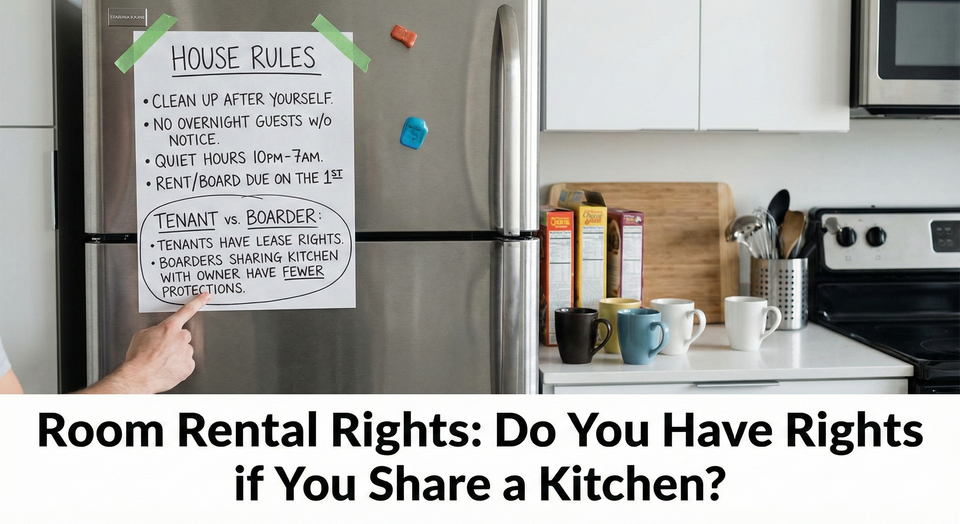
In the 2026 rental landscape, the rising cost of living has forced thousands of people into "shared accommodation" scenarios. Many of these are basement apartments or spare rooms where the renter shares a kitchen or bathroom with the owner. While these are often the cheapest places to live in Ontario or BC, they come with a massive legal "catch" that most people don't realize until it's too late.
If you share a kitchen or bathroom with your landlord (or their immediate family), you are likely not a "tenant" in the eyes of the law. You are a boarder, lodger, or roommate occupant. This means the standard protections of the Residential Tenancies Act (RTA) do not apply to you.
This guide breaks down the "Kitchen Loophole" for 2026, explains why you can be evicted without notice, and shows you the only ways to protect yourself when the law doesn't.
The Kitchen Loophole Explained (Ontario & BC)
The law in both Ontario and British Columbia contains a specific exemption that removes "shared living" from the standard provincial tenancy acts.
- Ontario (Section 5(i) of the RTA): The Act does not apply to "living accommodation whose occupant is required to share a bathroom or kitchen facility with the owner, the owner's spouse, child or parent..."
- British Columbia (Section 4(c) of the RTA): The Act does not apply to "living accommodation in which the tenant shares bathroom or kitchen facilities with the owner of that accommodation."
Why This Matters in 2026
If you fall under these exemptions, you do not have the right to a Landlord and Tenant Board (LTB) or Residential Tenancy Branch (RTB) hearing. You cannot fight a rent increase, you cannot demand repairs via a provincial inspector, and you can be asked to leave at any time. In the Ultimate Guide to Renting in Canada's Housing Crisis (2026), this is the most vulnerable position a renter can be in.
Eviction Without Notice: The Reality for Boarders
In a standard tenancy, evicting someone is a months-long process involving forms (like the N13 for Renovictions) and hearings. For a boarder sharing a kitchen, those rules disappear.
1. The "Reasonable Notice" Rule
Because the RTA doesn't apply, your relationship is governed by "Common Law" and your contract.
- The Norm: While "reasonable notice" (usually one rental period, such as one month) is the standard expectation, a landlord can legally change the locks if you breach a house rule or if the relationship sours.
- Police Involvement: If you refuse to leave a shared home, the landlord can call the police to have you removed as a "trespasser." Unlike a standard apartment where police will tell the landlord it's a "civil matter," in a shared kitchen scenario, the police are more likely to assist the homeowner.
2. No Rent Control
The Ontario Rent Increase Guideline 2026 of 2.1% does not apply to boarders. Your landlord can raise your rent by $500 next month, and your only choice is to pay it or move out.
How to Protect Yourself in a Shared Home
Since the law won't protect you, your Written Agreement is your only shield. In 2026, never move into a shared kitchen situation without a signed "Roommate Agreement" that includes these four clauses:
| Clause | Why You Need It |
|---|---|
| Notice Period | Explicitly state that "30 days' written notice" is required by either party to end the agreement. |
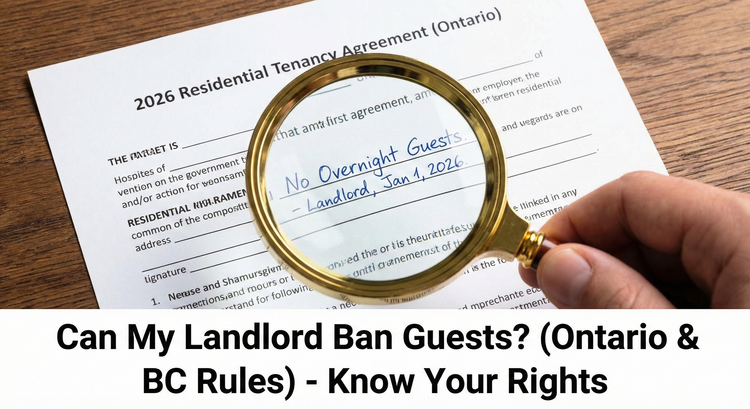
| Guest Policy | Ensure the landlord cannot illegally ban your guests by putting your rights in writing. |
| Utility Breakdown | Define exactly what percentage of heat and hydro you pay to avoid hidden costs. |
| Privacy | State that the landlord requires your permission to enter your bedroom, even if they own the house. |
Master Strategy for Roommate Occupants
1. The "Post-Tenancy" Shared Kitchen Trap
A common landlord scam in 2026 is to rent out a "self-contained" basement, but then later claim they use the basement kitchen for "laundry" or "extra cooking" to try and strip your rights.
- The Defense: If the landlord moves in after you have already established a tenancy, the RTA still applies. A landlord cannot unilaterally deprive you of your rights by moving their daughter into the spare room or using your kitchen.
- The Move: File an A1 Application (Application About Whether the Act Applies). The LTB will hold a hearing to decide if you are a tenant or a boarder. If you win, you are protected by the 2.1% rent cap and standard eviction rules.
2. Small Claims Court: Your Only Justice
If a landlord kicks you out with zero notice and keeps your Last Month's Rent deposit, the LTB cannot help you.
- The Route: You must sue in Small Claims Court. In 2026, you can sue for "Breach of Contract" and "Damages for Illegal Eviction." While it won't get you back into the house, it can force the landlord to pay for your moving costs and the difference in rent at your new, more expensive place.
3. Discrimination and the Human Rights Code
While the RTA doesn't protect boarders, the Human Rights Code still does.
- The Rule: A landlord-roommate cannot harass you or evict you based on race, religion, sexual orientation, or disability. If they do, you can file a claim with the Human Rights Tribunal of Ontario (HRTO).
4. Safety and Health Standards
Even as a boarder, you are entitled to a safe home.
- The Strategy: If the shared home has mold, no heat, or fire hazards, call your municipal 311 or Bylaw Office. They don't care if you're a "tenant" or a "boarder"—they enforce property standards and the fire code for every residential building.
Room Rental Rights Canada
Do I have tenant rights if I share a kitchen with my landlord? No. In Ontario and BC, if you share a kitchen or bathroom with the owner, you are exempt from the Residential Tenancies Act. You are considered a "boarder" or "occupant," meaning you are not protected by rent control or standard eviction notice periods. Your rights are limited to whatever is written in your private contract, and disputes must be resolved in Small Claims Court rather than through the Tenancy Board.
Frequently Asked Questions (FAQ)
Q: Can the landlord enter my room at any time?
A: If the RTA doesn't apply, there is no "24-hour notice" law. However, common law implies a right to privacy. Your agreement should explicitly state that the landlord cannot enter your bedroom without notice.
Q: Do I get my deposit back?
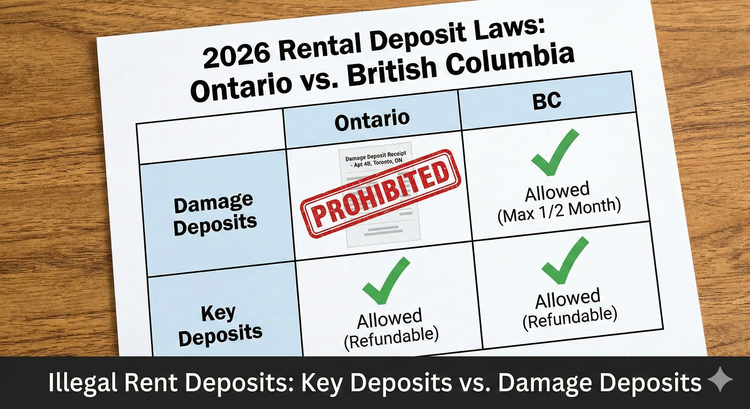
A: Since you aren't under the RTA, the rules for Illegal Damage Deposits are different. In a boarder situation, a landlord can legally ask for a damage deposit. If they refuse to return it, you must use Small Claims Court.
Q: What if I share a kitchen with roommates but NOT the landlord?
A: If the owner does not live in the house, you are a Tenant and you ARE protected by the RTA (as long as you are on the lease). Disputes with your roommates are private, but your relationship with the landlord is fully protected.
Q: Can I use the Rent Bank if I am a boarder?
A: Yes. Many Rent Banks in 2026 provide emergency loans to boarders and roommates to prevent homelessness, provided you have a written agreement.
About the Author
Jeff Calixte (MC Yow-Z) is a Canadian labour market researcher and digital entrepreneur specializing in government benefit data and cost-of-living support. As the founder of CanadaPaymentDates.ca and BetterPayJobs.ca, Jeff helps newcomers, students, and workers navigate the Canadian social safety net—from tracking CRA payment schedules to finding entry-level work.
Sources
- Landlord’s Self-Help Centre: RTA Fact Sheet: Sharing Kitchen or Bath
- TRAC BC: Roommates and the Law in British Columbia
- Community Legal Education Ontario (CLEO): Sharing a kitchen or bathroom with the landlord
- Tribunals Ontario: Form A1 – Application About Whether the Act Applies
Note
Rental laws and eviction guidelines are determined by provincial bodies (such as the LTB in Ontario or the RTB in BC) and are subject to legislative change. This guide provides a summary of current tenant rights for educational purposes and does not constitute legal advice. For specific disputes, we recommend contacting your provincial Legal Aid office or a licensed paralegal before signing any documents.