Canada Caregiver Credit 2026: Can You Claim Your Parent or Spouse?
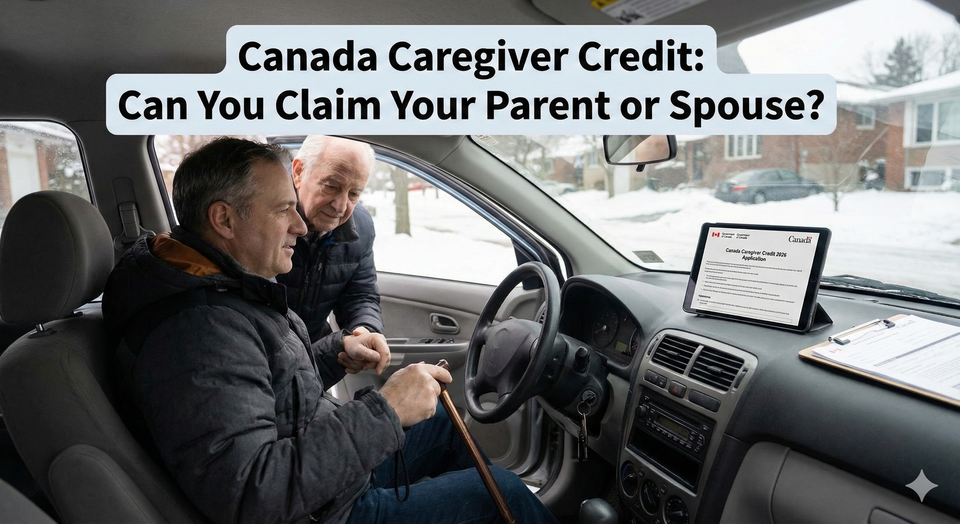
Caring for an aging parent, an infirm spouse, or a child with special needs is a full-time commitment that often carries a heavy financial burden. In 2026, as the cost of professional home care in Canada continues to skyrocket, the Canada Caregiver Credit (CCC) remains the federal government's primary tool for providing financial relief to family caregivers.
The CCC is a non-refundable tax credit that can be worth over $8,600 per dependant. However, it is one of the most under-claimed credits because of its complex "Stacking" rules. Many caregivers mistakenly believe that if their loved one doesn't live with them, they can't claim it—or that it's only for those with a Disability Tax Credit (DTC) approval.
As a cornerstone of our Hidden Tax Credits Canada 2026 Master List, this deep dive identifies who qualifies as a dependant, explains the 2026 income thresholds, and reveals the "Street Hacks" to unlock thousands in tax savings for your caregiving efforts.
1. How the Canada Caregiver Credit Works in 2026
The CCC is not a monthly check; it is a credit that reduces the amount of federal income tax you owe. If you support a family member with a mental or physical impairment, the CRA allows you to claim a "Base Amount" that effectively lowers your taxable income.
The 2026 Credit Amounts
The amount you can claim depends on your relationship to the person you are caring for:
- For a Spouse or Common-law Partner: You can claim a base amount of $2,687 (added to Line 30300) plus an additional amount of up to $8,601 (on Line 30425) depending on their income.
- For Dependant Adults (18+): For parents, grandparents, or adult children, you can claim up to $8,601 on Line 30450.
- For Minor Children (Under 18): You can claim $2,687 for each infirm child on Line 30500.
2. Who Qualifies as a "Dependant"?
To claim the CCC in 2026, the person you are caring for must depend on you for support because of an impairment in physical or mental functions.
The Residency Rule
The dependant must be a resident of Canada at some point during the year. This is a critical rule for those following our Newcomer Housing Rules—you cannot claim a parent who still lives in another country, even if you send them money every month.
Eligible Relationships
You can claim the credit for your (or your spouse’s) infirm:
- Child or grandchild
- Parent or grandparent
- Brother, sister, niece, nephew, aunt, or uncle
The "Necessities of Life" Test
You do not have to live with the person to claim the credit. However, you must prove they rely on you for the "basic necessities of life," such as food, shelter, or clothing. If your parent lives in a nearby apartment but you pay their rent or do all their grocery shopping because they cannot do it themselves, you qualify.
3. 2026 Income Thresholds: The Clawback Zone
The CCC is "Income-Tested," meaning if the person you are caring for earns too much money, your credit will be reduced or eliminated.
| Scenario | Max Credit | Income Cut-off (2026) |
| Infirm Spouse | $8,601 (Total) | $28,798 |
| Infirm Parent/Relative | **$8,601** | $28,798 |
| Infirm Child (<18) | **$2,687** | No income limit |
Note: For adult dependants, the credit begins to decrease once their net income (Line 23600) exceeds $20,197. Once they earn more than $28,798, the credit drops to zero.
Caregiver Wealth Hacks
This deep dive focuses on the technical nuances that most tax software handles poorly. These "Street Hacks" are the keys to ensuring your claim is approved without a CRA audit.
1. The "Sibling Split" Strategy
A high-traffic query for 2026 is "can two siblings split the Canada caregiver credit."
- The Hack: If you and your sister both support your aging mother, you can split the $8,601 claim.
- The Strategy: The total claimed between you cannot exceed the maximum allowed for one person.
- The Move: If one sibling is in a higher tax bracket, they should take the larger share of the credit to maximize the "Non-Refundable" tax reduction for the family.
2. The "No DTC Required" Loophole
Many families search for "doctor's note for Canada caregiver credit."
- The Street Angle: Most people assume you need an approved Disability Tax Credit (T2201) to claim the caregiver credit.
- The Hack: You do not need the DTC.
- The Strategy: The CRA only requires a signed statement from a medical practitioner confirming when the impairment began and that the person is dependent on others.
- The Move: If your parent has early-stage dementia or severe mobility issues but doesn't meet the "90% of the time" rule for the DTC, you can still claim the CCC. This is the way to get relief for the "in-between" stage of caregiving.
3. Claiming a Parent Not Living With You
A common 2026 search is "caregiver amount for parent not living with me."
- The Hack: As of the 2026 tax year, the "Co-residency" requirement remains removed for the CCC.
- The Requirement: You must be able to prove "Support."
- The Strategy: Keep receipts for groceries you bought for them, or records of utility bills you paid on their behalf. If the CRA asks for proof, these financial records establish the "Dependency" required for the $8,601 claim.
4. Line 30450 vs. Line 30425: The "Stacking" Hack
The search for "Line 30450 vs 30425 guide" is high because the tax forms are confusing.
- The Reality: Line 30425 is for your spouse or an "Eligible Dependant" (like a child you are already claiming a base amount for). Line 30450 is for "Other" infirm relatives.
- The Strategy: If you are a single parent caring for an infirm adult child, you claim them on Line 30425. If you are married and caring for your infirm mother, you claim her on Line 30450. Knowing the right line prevents "Double-Dipping" errors that trigger a manual CRA review.
5. The "Medical Expense" Double-Up
For those following our Medical Expense Tax Credit List, there is a major wealth move.
- The Hack: You can claim the Canada Caregiver Credit AND the Medical Expenses you paid for that same person.
- The Payoff: If you paid for your father's hearing aids or home nursing, you claim the expenses on Line 33199 and the caregiver credit on Line 30450. This "Double-Up" is the fastest way to turn a $0 refund into a $3,000+ windfall.
5. Summary: Your Caregiver Tax Checklist
- Verify Infirmity: Get a signed note from their doctor (keep it in your files; don't send it unless asked).
- Check Net Income: Ensure your dependant's income (Line 23600) is below $28,798.
- Identify the Line: Spouse/Eligible Dependant = Line 30425; Other Relative = Line 30450.
- Coordinate with Siblings: Ensure the total claim for the dependant doesn't exceed $8,601.
- Review Medical Expenses: Add up all receipts for meds, travel, and devices you paid for the dependant.
Canada Caregiver Credit
How much is the Canada Caregiver Credit for 2026? For the 2026 tax year, you can claim up to $8,601 for an infirm spouse or an adult dependant (parent, sibling, or child 18+) whose net income is less than $28,798. For infirm children under 18, the credit amount is $2,687. You do not have to live with the dependant to qualify, but you must consistently provide them with the basic necessities of life, and a medical practitioner must certify the impairment.
Frequently Asked Questions (FAQ)
Q: Can I claim the credit if my parent is 65 but NOT infirm?
A: No. In 2026, you cannot claim a senior parent just because of their age. They must have a physical or mental impairment that makes them dependent on you for support.
Q: What is the "Canada Caregiver Benefit"?
A: There is no federal program with that name. People often confuse the Canada Caregiver Credit (the tax break) with the EI Caregiving Benefits (the weekly payments if you miss work). We cover the weekly payments in our EI Benefits Guide.
Q: Can I claim my spouse if they are on ODSP or AISH?
A: Yes. Since ODSP/AISH is often below the $20,197 threshold, you will likely qualify for the full $8,601 credit for your spouse.
About the Author
Jeff Calixte (MC Yow-Z) is a Canadian labour market researcher and digital entrepreneur specializing in government benefit data and cost-of-living support. As the founder of CanadaPaymentDates.ca and BetterPayJobs.ca, Jeff helps newcomers, students, and workers navigate the Canadian social safety net—from tracking CRA payment schedules to finding entry-level work.
Sources
- Canada Revenue Agency (CRA): Canada caregiver credit - Eligibility and Claim Amounts
- CRA: Line 30450 – Canada caregiver amount for other infirm dependants age 18 or older
- TurboTax Canada: An Overview of the Canada Caregiver Tax Credit
Note
Official 2026 payment dates and benefit amounts are determined by the Canada Revenue Agency (CRA) and provincial governments. While we strive to keep this information current, government policies and schedules are subject to change without notice. All data in this guide is verified against official CRA circulars at the time of publication and should be treated as an estimate. We recommend confirming the status of your personal file directly via CRA My Account or by calling the CRA benefit line at 1-800-387-1193.