OAS Clawback 2026: What is the "Recovery Tax" Threshold?
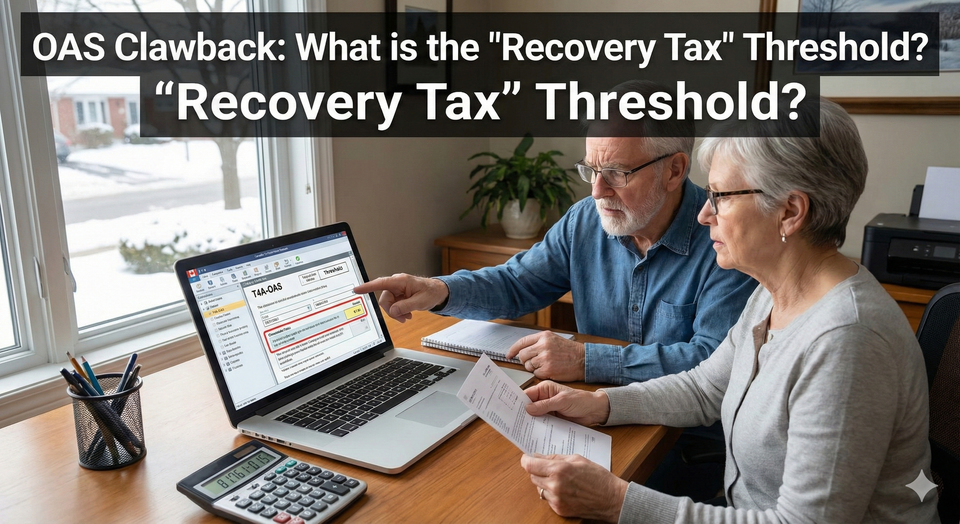
For high-earning Canadian seniors, the Old Age Security (OAS) clawback is the most frustrating "hidden tax" in the retirement system. Officially known as the OAS Recovery Tax, this provision ensures that higher-income retirees repay a portion—or even all—of their pension benefits. In 2026, as inflation has pushed both thresholds and cost-of-living higher, understanding where the "Clawback Zone" begins is essential for protecting your monthly cash flow.
If you are following our Ultimate Savings Guide, you know that maximizing after-tax income is the goal. The OAS clawback is unique because it isn't just a tax on what you earn; it is a reduction of a benefit you’ve likely looked forward to for decades. For every dollar you earn above the threshold, the government takes back 15 cents of your OAS.
This deep dive reveals the exact 2026 OAS clawback thresholds, provides a step-by-step calculation guide, and identifies the strategies to lower your "Net World Income" without sacrificing your lifestyle.
1. The 2026 OAS Clawback Thresholds: The "New Normal"
The OAS clawback is based on your Net World Income (Line 23400 on your T1 tax return). The thresholds are adjusted annually for inflation.
The "Two-Phase" 2026 Schedule
Because the OAS year runs from July to June, two different income years matter in 2026:
- January to June 2026 (Based on 2024 Income): * Minimum Threshold: $90,997
- Full Clawback (65-74): Approximately $148,451
- Full Clawback (75+): Approximately $154,196
- July 2026 to June 2027 (Based on 2025 Income): * Minimum Threshold: $93,454
- Full Clawback (65-74): Approximately $152,062
- Full Clawback (75+): Approximately $157,923
Note: Seniors aged 75 and over have a higher "Full Clawback" limit because they receive a 10% higher base OAS payment, meaning there is "more" benefit to claw back before it hits zero.
2. How the 15% Recovery Tax is Calculated
The math behind the clawback is straightforward but punitive. The government takes 15 cents for every dollar your income exceeds the threshold.
The 2026 Calculation Example
Let's look at a 68-year-old senior in Ontario with a 2025 net income of $105,000.
- Identify the Excess: $105,000 - $93,454 = **$11,546** in excess income.
- Apply the 15% Rate: $11,546 \times 0.15 = **$1,731.90**.
- Monthly Impact: $1,731.90 \div 12 = **$144.33** per month.
Starting in July 2026, this senior will see $144.33 deducted from their monthly OAS check before it even hits their bank account.
3. The "Circular" Nature of OAS Income
One of the most confusing aspects of the clawback is that OAS income itself is included in the Line 23400 calculation. This means that for some seniors right on the edge of the threshold, the OAS payment they receive actually helps trigger the clawback of that same payment.
Clawback Defense
This deep dive identifies the specific tax-planning moves that most seniors miss until it’s too late. These "Street Hacks" are designed to keep your income high but your "Line 23400" low.
1. The "RRSP Meltdown" Strategy (Age 60-64)
A common search is "RRSP meltdown strategy to avoid clawback." * The Street Angle: Most people wait until age 71 to convert their RRSP to a RRIF, leading to massive forced withdrawals that trigger the clawback.
- The Hack: If you retire at 60, start taking large RRSP withdrawals before you turn 65.
- The Strategy: By "melting down" your RRSP in your early 60s, you pay tax when your income is lower and you don't yet have OAS. This reduces your RRIF balance at age 72, ensuring your future mandatory withdrawals don't push you over the $93,454 limit.
2. The Dividend "Gross-Up" Trap
Many seniors love Canadian dividends, but they search for "impact of dividend gross up on OAS clawback" too late.
- The Trap: When you receive $1,000 in eligible Canadian dividends, the CRA "grosses up" that amount by 38% on your tax return. For the clawback calculation, you aren't seen as having $1,000; you are seen as having **$1,380**.
- The Hack: If you are near the threshold, consider switching some non-registered investments from dividend-paying stocks to Capital Gains-focused investments or Total Return ETFs. Only 50% of capital gains are included in your income, compared to 138% for dividends.
3. Pension Income Splitting: The 50% Hack
Pension income splitting OAS clawback hack.
- The Hack: If one spouse earns $120,000 (triggering a clawback) and the other earns $40,000, you can split up to 50% of eligible pension income (like RRIF or private pension payments).
- The Move: By moving $30,000 of income to the lower-earning spouse, the high-earner drops to $90,000—below the $93,454 threshold—effectively saving their entire OAS benefit.
4. The TFSA Stealth Income Strategy
The Best Senior Bank Accounts often emphasize high interest, but that interest is taxable.
- The Hack: Use your TFSA for any income-generating assets.
- The Strategy: Withdrawals from a TFSA are not included in your Line 23400 income. In 2026, with the TFSA limit reaching $109,000 for those who were 18 in 2009, you can generate thousands in monthly cash flow that is "invisible" to the OAS recovery tax.
5. Corporate Holding Co Promissory Notes
For digital entrepreneurs and business owners following our Note on Canadian Business, there is a complex but legal hack.
- The Hack: If you have a holding company, you can loan money to yourself via an interest-free promissory note or take repayments of a shareholder loan.
- The Payoff: Shareholder loan repayments are tax-free and do not count toward your net world income, allowing you to live a "High Income" lifestyle while reporting a "Low Income" to the OAS system.
6. The "OAS Deferral" Math (Age 65-70)
Users often ask: Should I take OAS at 65 if I'm still working?
- The Hack: If you are earning $100,000 at age 65, your OAS will be clawed back significantly. Defer it.
- The Benefit: For every month you defer, your future payment increases by 0.6%. If you wait until age 70, your pension is 36% higher. Plus, the clawback threshold also rises with inflation over those five years.
7. Selling Your Principal Residence: The 0% Impact
A common fear is "selling principal residence OAS clawback rule."
- The Reality: The sale of your principal residence in Canada is tax-exempt.
- The Move: The millions of dollars you might gain from selling a home in Toronto or Vancouver do not count toward your Line 23400 income. You can sell your home, move to a cheaper city, and keep your full OAS.
5. Summary: 2026 Clawback "Safe Zones"
| Yearly Net Income | Clawback Status | Action Required |
| Below $93,454 | 100% SAFE | Continue regular tax filing. |
| $93,454 to $120,000 | Partial Recovery | Use income splitting or TFSA withdrawals. |
| $120,000 to $150,000 | Heavy Recovery | Consider RRSP meltdown or capital gains shift. |
| Above $157,923 | 100% Clawed Back | Defer OAS until income drops or age 70. |
OAS Clawback 2026
What is the OAS clawback threshold for 2026? For the period of July 2026 to June 2027, the OAS clawback (Recovery Tax) begins if your 2025 net world income exceeds $93,454. For every dollar above this threshold, your OAS benefit is reduced by 15 cents. Seniors aged 65-74 will have their OAS fully clawed back if their income reaches approximately $152,062, while those 75 and over hit the full clawback point at approximately $157,923.
Frequently Asked Questions (FAQ)
Q: Is the clawback based on household income?
A: No. Unlike the Guaranteed Income Supplement (GIS), the OAS clawback is based solely on your individual income. Your spouse’s income does not affect your threshold, although it may impact your ability to split pension income.
Q: Can I appeal the clawback if my income drops suddenly?
A: Yes. If your income this year will be significantly lower than last year (due to retirement or the loss of a pension), you can file Form T1213(OAS) to request that Service Canada reduce the recovery tax deducted from your monthly payments immediately.
Q: Does CPP income count toward the clawback?
A: Yes. Every dollar of CPP or QPP you receive is included in your Line 23400 income. This is why many high-earners choose to defer both CPP and OAS to age 70.
Q: What is "Net World Income"?
A: It includes all income earned in Canada (employment, pensions, investments) plus any income earned from foreign sources (foreign pensions, rental property abroad).
About the Author
Jeff Calixte (MC Yow-Z) is a Canadian labour market researcher and digital entrepreneur specializing in government benefit data and cost-of-living support. As the founder of CanadaPaymentDates.ca and BetterPayJobs.ca, Jeff helps newcomers, students, and workers navigate the Canadian social safety net—from tracking CRA payment schedules to finding entry-level work.
Sources
- Canada Revenue Agency (CRA): Old Age Security Return of Income Guide 2026
- Employment and Social Development Canada: OAS Recovery Tax Thresholds - 2025/2026
- TaxTips.ca: Old Age Security (OAS) Pension Recovery Tax (Clawback)
Note
CPP and OAS payment schedules and eligibility are determined by Employment and Social Development Canada (ESDC). While the CRA administers the tax recovery (clawback), the benefits themselves are managed by Service Canada. We recommend confirming your payment status via My Service Canada Account (MSCA) or by calling the pension line at 1-800-277-9914.